How to Start Export Import Business
How to Start Export Import Business Benefits of Joining Our Export Import Training Program Get Trained by Real Exporter..
Harsh Dhawan
Uttar Pradesh is no longer just the “Heartland of India”; it is rapidly becoming the export powerhouse of the country. Under the One District One Product (ODOP) initiative, the state has seen a massive surge in manufacturing. However, for a new exporter, the biggest fear is often: “How do I compete with the giants?”
The secret isn’t in competing on volume; it’s in competing on niche, value-added products. By shifting from raw materials to finished, branded goods, small-scale entrepreneurs can enter the global market with investments as low as ₹50,000.
Here is a breakdown of high-potential, low-investment export ideas across UP’s most iconic districts.
Western UP is the sugar bowl of India, but the real money is moving away from raw sugar and toward the “health and wellness” sector.
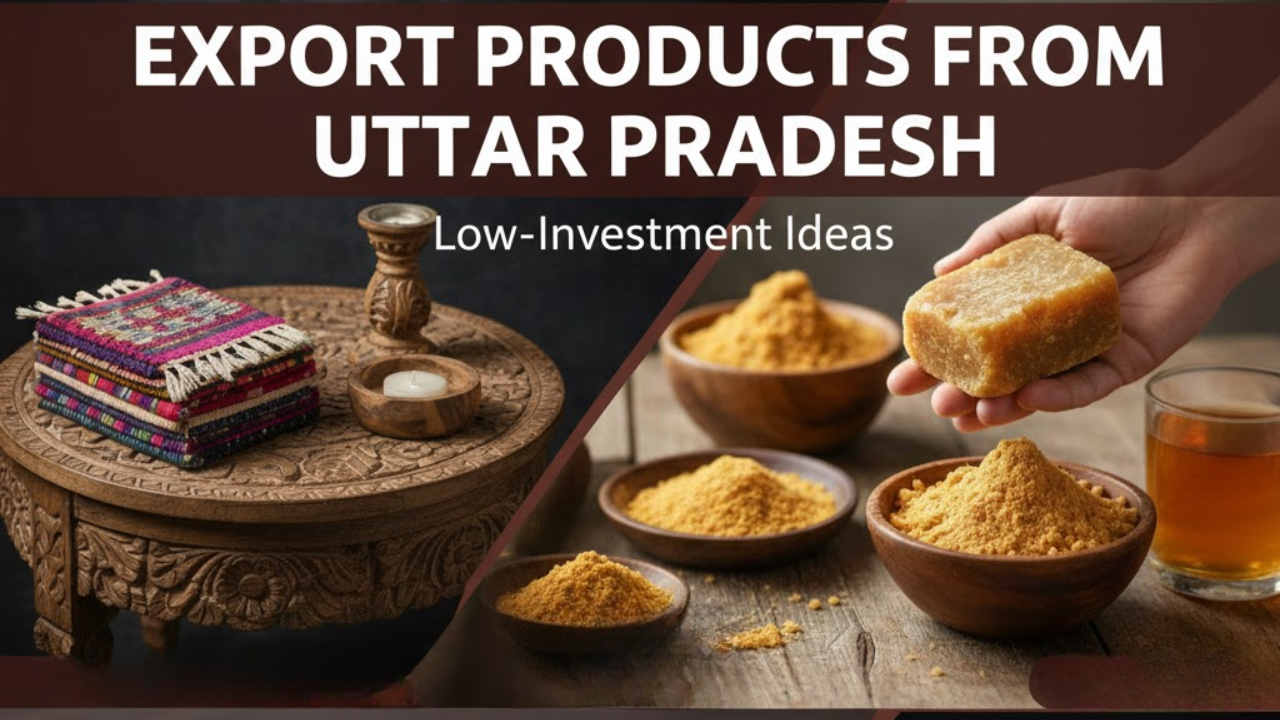
The Products: Chemical-free natural jaggery powder, jaggery cubes for tea/coffee, sugarcane vinegar, and organic cane juice powder.
Why the Competition is Low: Most local players export raw jaggery in bulk blocks. There is a massive gap in the market for premium, branded retail packaging for health-conscious consumers in the Gulf and SE Asia.
Investment: ₹50,000 – ₹2 Lakh.
The Products: Locally assembled fitness resistance bands, handmade sports accessories (whistles, grips), and small gym utility items.
Why the Competition is Low: Large factories in Meerut focus on massive container loads of cricket bats or footballs. Small, customized fitness accessories are often overlooked.
Investment: ₹1 – ₹3 Lakh.
While Lucknow and Varanasi are famous for textiles, the “apparel” market is saturated. The trick is to pivot toward Home Décor and Accessories.
The Products: Hand-embroidered cushion covers, Chikankari scarves, stoles, and ethnic fashion clutches.
Why the Competition is Low: Everyone is selling Kurtas. By focusing on lifestyle accessories, you reduce sizing issues and returns, making it easier to sell to boutiques in Europe and Japan.
Investment: ₹60,000 – ₹2 Lakh.
The Products (Varanasi): Handmade paper stationery and eco-friendly gift wraps.
The Products (Bhadohi): Mini prayer mats, wall-hanging rugs, and kids’ room rugs.
Why the Competition is Low: While the world buys heavy Varanasi saris and giant Bhadohi carpets, small-format décor is booming on platforms like Etsy and Amazon Global.
Investment: ₹40,000 – ₹1.5 Lakh.
Kanpur and Firozabad are industrial giants, but there is a “micro-niche” waiting to be tapped by small exporters.
The Products: Leather card holders, laptop sleeves, and travel cable organizers.
Market Insight: Large exporters want orders for 5,000 jackets. They don’t want to deal with 200 high-quality laptop sleeves. This is where a small merchant exporter can win.
Investment: ₹1 – ₹3 Lakh.
The Products: Glass candle jars, decorative lamps, and small glass planters.
Market Insight: The bangle market is crowded. However, the home fragrance industry in the USA and Europe is desperate for unique, handmade glass jars for candles.
Investment: ₹70,000 – ₹2.5 Lakh.
The dry terrains of Jhansi and the spiritual heart of Prayagraj offer unique biological and cultural products.
Jhansi/Lalitpur: Herbal powders and Ayurvedic raw herbs. With the global “back to nature” movement, branded herbal supplements have high margins.
Prayagraj: Organic pulse blends and “Temple-run” utility items (incense holders, copper vessels).
Mirzapur: Natural stone handicrafts and handmade stone bowls. These are highly prized in European kitchens for their “earthy” aesthetic.
Kannauj: Moving from bulk “Attar” to finished solid perfume sticks and herbal room fresheners.
Success in exports isn’t about having the biggest factory; it’s about having the best strategy.
Product over Raw Material: Don’t export raw wood; export a wooden candle holder. The “Value-Add” is where your profit lies.
The Story Matters: Global buyers love the “Made in India” story. Mention the district’s heritage on your packaging.
Start as a Merchant: You don’t need to own a factory. Tie up with local artisans, handle the branding and quality check, and ship it out.
Small Batches: Use Courier Shipping (CSB-V) for small trials before moving to heavy sea containers.
Identify one product from your district.
Get your IEC (Import Export Code) and GST ready.
Create high-quality digital catalogs.
Reach out to “Niche” buyers (small boutique owners, specialty retailers).
Execute a trial shipment of 20–50 units.
Ready to take the leap? The world is looking for what Uttar Pradesh has to offer. By choosing a low-competition niche, you aren’t just building a business; you’re taking your district’s legacy to the global stage.
How to Start Export Import Business Benefits of Joining Our Export Import Training Program Get Trained by Real Exporter..
Import Export Course Benefits of Joining Our Export Import Training Program Get Trained by Real Exporter & Importer Start..
How to Start Export Business Benefits of Joining Our Export Import Training Program Get Trained by Real Exporter &..