🌽 What Is Maize Stalk Jaggery?
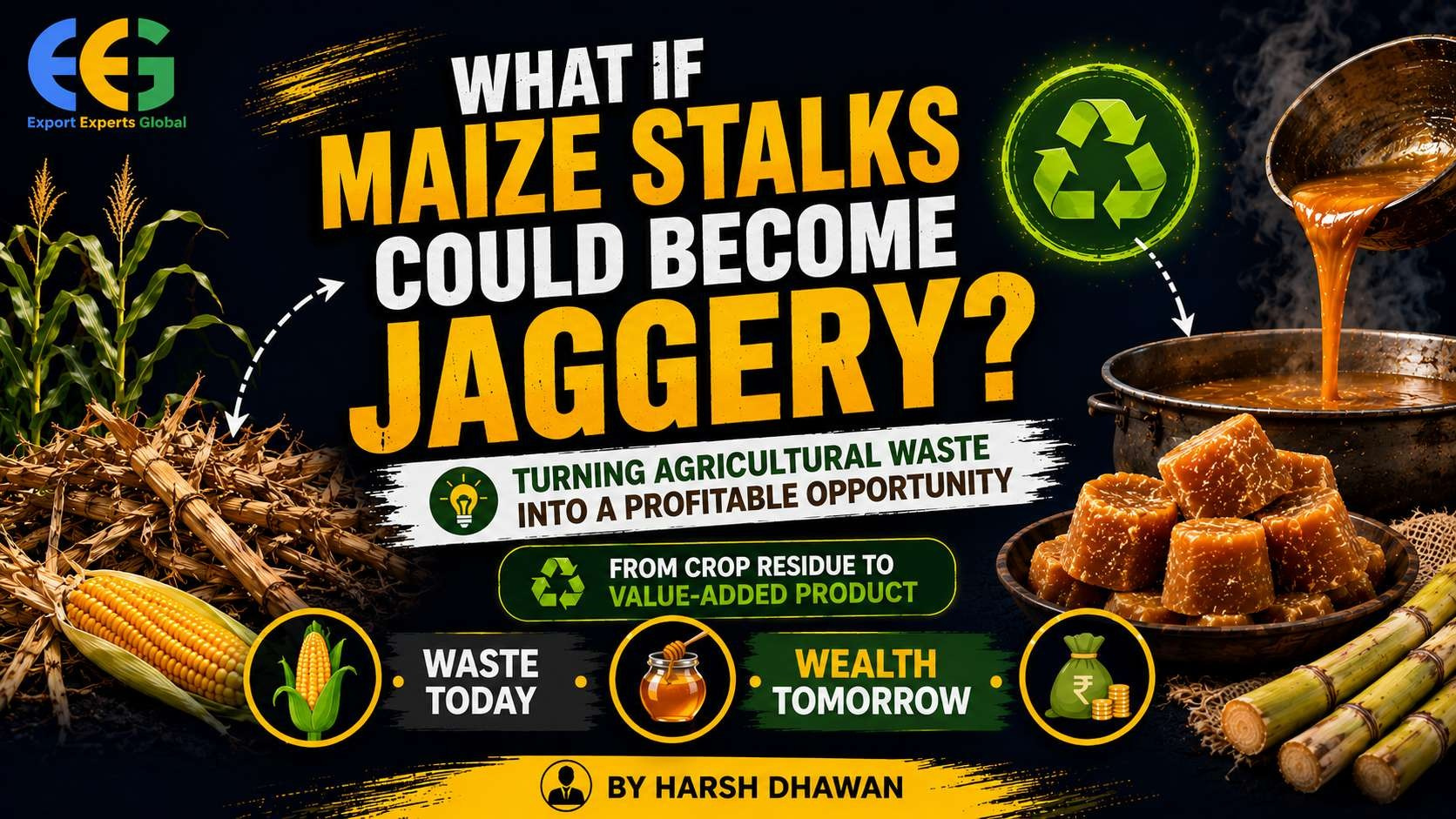
Maize stalk jaggery is a value-added product made by extracting juice from fresh maize stalks and concentrating it through heating until it forms a thick syrup that can be molded into jaggery.
Unlike conventional jaggery made from sugarcane or palm sap, maize stalk jaggery is still in the experimental and innovation stage. It represents an example of agricultural resource optimization rather than an established commercial industry.
💡 The idea is simple:
Instead of wasting maize stalks, utilize them to create another product with potential economic value.
🚜 Why Are Maize Stalks Usually Wasted?
After maize harvesting, farmers generally have three options:
🌾 Leave stalks in the field
🐄 Feed them to livestock
🔥 Burn them to clear the land quickly
Burning crop residue causes:
❌ Air pollution
❌ Loss of valuable biomass
❌ Environmental damage
❌ Carbon emissions
Finding productive uses for crop residues can help improve farm sustainability while reducing waste.
💡 How the Idea Started
Some innovative farmers explored whether maize stalks could be processed in a manner similar to sugarcane.
The process involved:
🌽 Harvesting fresh stalks
🧃 Crushing the stalks
💧 Extracting juice
🔥 Boiling the juice
🍯 Producing a concentrated jaggery-like product
This approach highlights the importance of experimentation and value addition in agriculture.
⚙️ Step-by-Step Production Process
🌽 Step 1: Collect Fresh Maize Stalks
Freshly harvested green stalks generally contain more moisture than dry stalks.
Proper handling immediately after harvesting helps maximize juice extraction.
🧃 Step 2: Juice Extraction
The stalks are crushed using mechanical rollers similar to sugarcane crushers.
The extracted liquid is filtered to remove plant fibers and impurities.
🔥 Step 3: Heating
The filtered juice is heated continuously.
Water gradually evaporates while the liquid becomes thicker.
Proper temperature control is important throughout the process.
🍯 Step 4: Concentration
As moisture decreases, the syrup thickens.
Continuous stirring helps prevent scorching.
🧊 Step 5: Molding
The concentrated product is poured into molds.
After cooling, it solidifies into jaggery blocks.
💰 Business Benefits
If technically and commercially viable, this approach may offer several advantages:
✅ Additional farm income
✅ Better utilization of crop residues
✅ Reduced waste
✅ Lower dependence on grain sales alone
✅ Rural employment opportunities
🌱 Environmental Advantages
Using maize stalks productively can contribute to:
♻️ Reduced crop residue burning
🌍 Lower pollution
🌿 Improved biomass utilization
🌱 Sustainable agriculture
🌎 Circular farming practices
📈 Market Opportunities
Potential customer segments may include:
🍯 Organic food stores
🥗 Health-conscious consumers
🛒 Specialty grocery retailers
🌿 Natural food brands
🏪 Local markets
🌍 Export markets (subject to regulatory compliance and product acceptance)
🌍 Export Potential
If commercial production becomes standardized and meets international food safety requirements, there may be opportunities in markets that value innovative natural sweeteners.
Export success would require:
✅ Food safety compliance
✅ Proper packaging
✅ Quality consistency
✅ Regulatory approvals
📦 Packaging Ideas
Different packaging formats can target different customers:
🛍️ Retail packs:
250 g
500 g
1 kg
📦 Bulk packs:
5 kg
10 kg
20 kg
Packaging should include:
✅ Batch number
✅ Manufacturing date
✅ Nutritional information
✅ Food-grade materials
🏭 Equipment Required
Basic processing may involve:
⚙️ Juice crusher
🔥 Boiling pan
🥄 Stirring equipment
🧺 Filtration unit
📦 Packaging machine
👨🌾 Who Can Start This Business?
This concept may interest:
🚜 Farmers
🌱 Farmer Producer Organizations (FPOs)
🏭 Small food processors
👨💼 Rural entrepreneurs
🥬 Organic product startups
⚠️ Challenges
Before investing, it is important to evaluate:
⚠️ Sugar concentration in maize stalks
⚠️ Juice recovery rates
⚠️ Processing costs
⚠️ Shelf life
⚠️ Consumer demand
⚠️ Commercial scalability
Pilot testing and technical validation are recommended before large-scale production.
💼 Business Tips
✔️ Start with small batches
✔️ Test product quality
✔️ Gather customer feedback
✔️ Improve processing efficiency
✔️ Build a unique brand
✔️ Follow food safety regulations
📣 Marketing Ideas
Promote through:
📱 Instagram
▶️ YouTube
📘 Facebook
💼 LinkedIn
🛒 E-commerce platforms
📦 Agricultural exhibitions
🌟 Future Outlook
As agriculture moves toward sustainability and resource efficiency, innovative uses of crop residues are likely to receive more attention.
Research institutions and entrepreneurs continue to explore new ways to create value from agricultural by-products, and maize stalk utilization is one example of this trend.
Overall Analysis
Maize farming does not have to end with grain harvesting. Exploring productive uses for crop residues can help reduce waste and encourage innovation. While maize stalk jaggery is still an emerging concept rather than a widely established commercial product, it illustrates how creative thinking can open new possibilities in agriculture.
Anyone interested in this opportunity should conduct technical trials, assess costs, verify market demand, and comply with applicable food safety standards before commercial production.