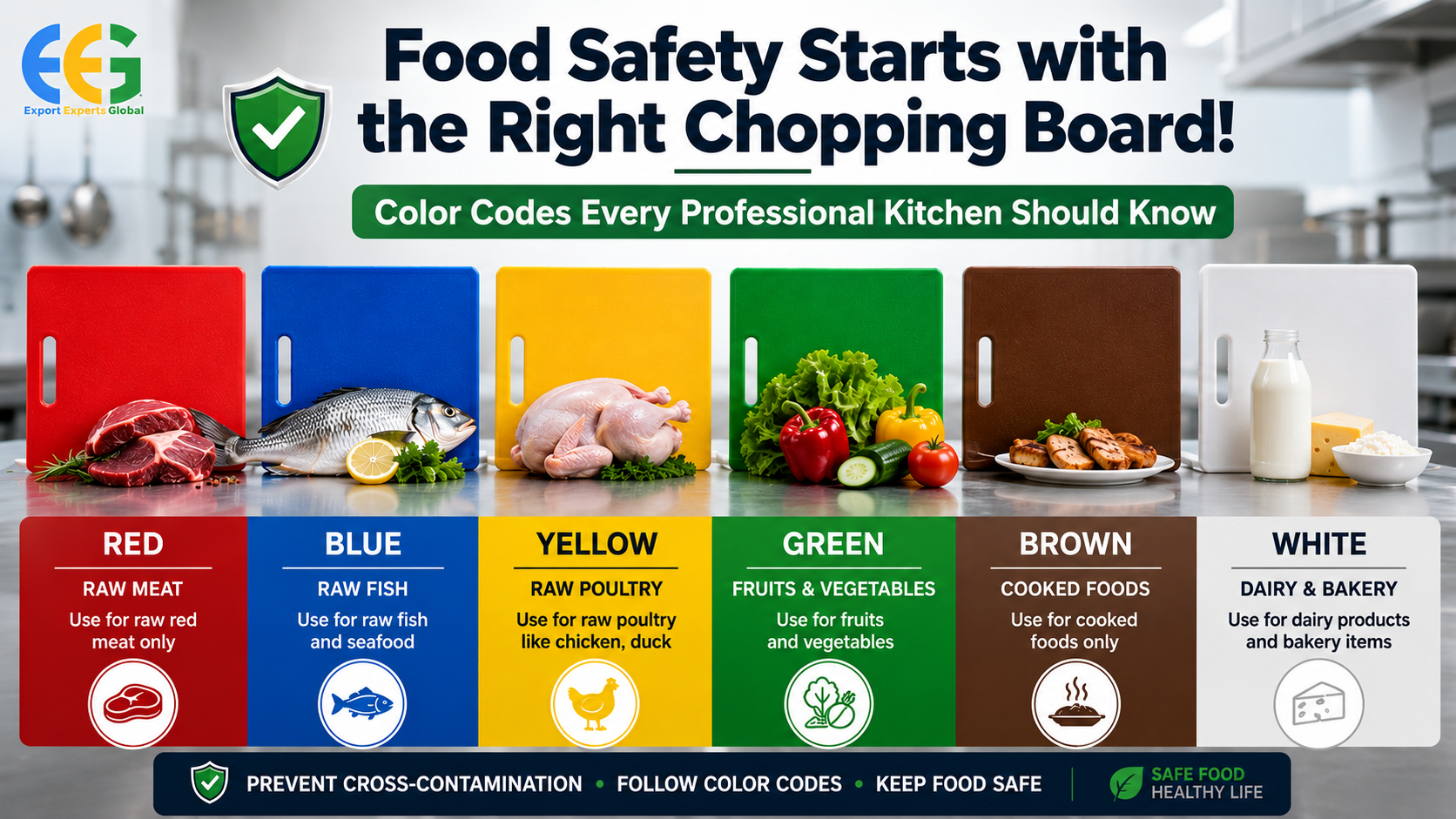
🔪 What Are Color-Coded Chopping Boards?
Color-coded chopping boards are cutting surfaces assigned to specific food categories. Instead of using one board for every ingredient, each color represents a particular type of food.
This system minimizes the transfer of bacteria, allergens, and harmful microorganisms from one food item to another.
For example, cutting raw chicken on the same board used for salad vegetables without proper sanitation can spread dangerous bacteria such as Salmonella and Campylobacter.
Using dedicated chopping boards is one of the easiest preventive measures available.
🦠 What Is Cross-Contamination?
Cross-contamination occurs when harmful bacteria, viruses, allergens, or contaminants transfer from one food item to another.
Common causes include:
✔ Using the same knife for raw meat and vegetables
✔ Using one chopping board for multiple food groups
✔ Poor hand hygiene
✔ Dirty kitchen cloths
✔ Improper cleaning practices
✔ Incorrect food storage
Cross-contamination is responsible for many food poisoning incidents worldwide.
🌍 Why Color-Coded Boards Matter
Professional kitchens handle dozens or even hundreds of food items daily.
Without proper segregation, bacteria can easily spread.
Benefits include:
✅ Better food safety
✅ Improved kitchen organization
✅ Easier staff training
✅ Reduced foodborne illnesses
✅ Compliance with food safety regulations
✅ Higher customer confidence
✅ Better hygiene inspections
🟥 Red Chopping Board
Used For:
🥩 Raw Meat
Examples include:
• Beef
• Mutton
• Pork
• Goat meat
• Lamb
Raw meat naturally contains bacteria that should never contaminate cooked foods or fresh vegetables.
Always sanitize the board after use.
🟨 Yellow Chopping Board
Used For:
🍗 Raw Poultry
Suitable for:
• Chicken
• Turkey
• Duck
• Quail
Poultry carries bacteria like Salmonella and Campylobacter, making strict separation extremely important.
🟦 Blue Chopping Board
Used For:
🐟 Seafood
Examples:
• Fish
• Shrimp
• Crab
• Lobster
• Squid
Seafood requires dedicated preparation areas to prevent odor transfer and bacterial contamination.
🟩 Green Chopping Board
Used For:
🥗 Fruits & Vegetables
Perfect for:
• Leafy vegetables
• Tomatoes
• Cucumbers
• Fruits
• Herbs
Fresh produce is often eaten raw, making contamination prevention critical.
⬜ White Chopping Board
Used For:
🧀 Dairy & Bakery Products
Examples:
• Cheese
• Bread
• Butter
• Cakes
• Pastries
Ready-to-eat foods should always be prepared separately from raw ingredients.
🟫 Brown Chopping Board
Used For:
🍖 Cooked Meat
Suitable for:
• Roasted meat
• Grilled meat
• Cooked chicken
• BBQ items
Never place cooked meat back on a board used for raw meat.
🟪 Purple Chopping Board
Used For:
🌾 Allergen-Free Food
Essential in kitchens preparing meals for people with food allergies.
Used for:
• Gluten-free meals
• Nut-free food
• Dairy-free dishes
• Special dietary meals
Cross-contact with allergens can cause severe allergic reactions.
🍽️ Industries That Use Color-Coded Boards
The system is widely adopted by:
🏨 Hotels
🍴 Restaurants
🍕 Cloud Kitchens
🥐 Bakeries
🏥 Hospitals
🏫 School Cafeterias
✈ Airline Catering
🚢 Cruise Ships
🏭 Food Manufacturing Units
🍱 Catering Companies
📋 Food Safety Standards Supported
Using color-coded chopping boards supports compliance with:
✔ HACCP
✔ ISO 22000
✔ GMP
✔ FSSAI Guidelines
✔ International Food Hygiene Practices
These systems emphasize preventing contamination before it occurs.
🧼 Cleaning Best Practices
After every use:
🧽 Wash with hot water and food-safe detergent.
💧 Rinse thoroughly.
🦠 Sanitize using approved food-grade sanitizer.
🌬 Allow the board to air dry completely.
📦 Store vertically in a clean area.
⚠️ When Should You Replace a Chopping Board?
Replace immediately if:
❌ Deep knife cuts appear.
❌ Surface becomes rough.
❌ Strong odors remain.
❌ Cracks develop.
❌ Warping occurs.
Damaged boards can harbor bacteria that are difficult to remove.
👨🍳 Staff Training Tips
Every kitchen employee should understand:
✔ Color meanings
✔ Cleaning procedures
✔ Proper knife usage
✔ Hand washing
✔ Sanitizing methods
✔ Food storage rules
Regular refresher training improves consistency and reduces errors.
🌱 Sustainable Options
Many businesses are now choosing eco-friendly chopping boards made from:
♻ Recycled plastic
🌿 Bamboo
🌳 FSC-certified wood (where appropriate)
🌎 Sustainable composite materials
Selecting durable and recyclable products supports environmental responsibility while maintaining hygiene standards.
🚫 Common Mistakes to Avoid
Avoid these practices:
❌ Using one board for all foods
❌ Skipping sanitation between tasks
❌ Ignoring worn-out boards
❌ Mixing raw and cooked foods
❌ Storing dirty boards
❌ Sharing allergen-free boards with regular food preparation
Small mistakes can have serious food safety consequences.
📈 Business Benefits
Implementing a color-coded chopping board system can:
⭐ Improve food quality
⭐ Reduce contamination risks
⭐ Strengthen customer trust
⭐ Enhance operational efficiency
⭐ Support successful hygiene audits
⭐ Lower the likelihood of foodborne illness incidents
For restaurants, hotels, and food manufacturers, these benefits contribute to better brand reputation and smoother operations.
Overall Analysis
Food safety begins with everyday habits. Color-coded chopping boards provide a practical, low-cost solution to reduce cross-contamination, improve hygiene, and maintain consistent food quality. Whether you manage a commercial kitchen or prepare meals at home, using the correct board for each food category protects both the food you serve and the people who consume it.
Adopting this simple system demonstrates professionalism, supports compliance with recognized food safety practices, and builds confidence among customers and staff alike. In modern food service, small changes often lead to significant improvements in safety and quality.