🥜 What is Peanut Shell Powder?
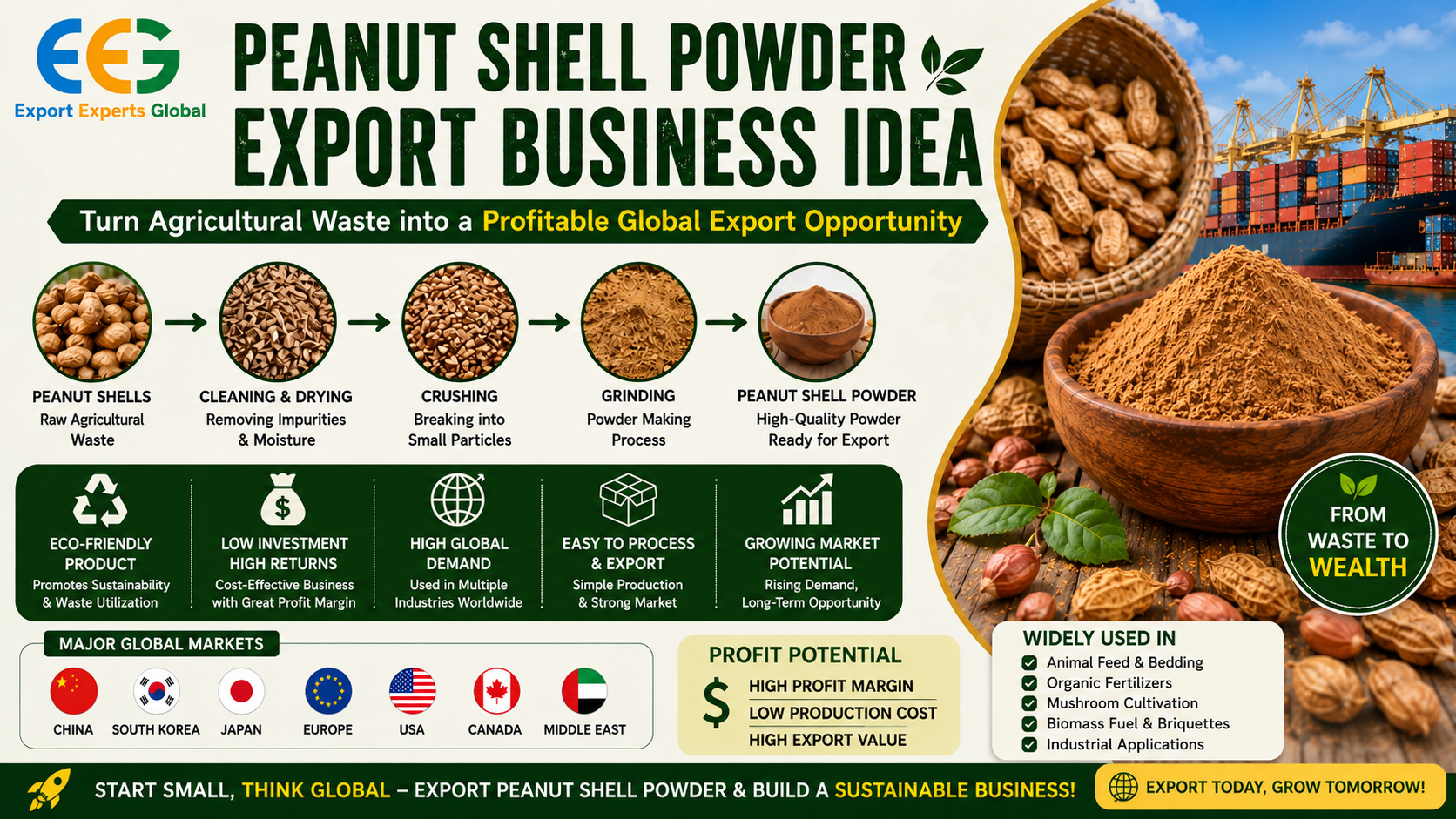
Peanut shell powder is produced by collecting peanut shells after the nuts are removed, followed by cleaning, drying, grinding, and sieving the shells into different particle sizes. The finished powder is used as a natural filler and functional ingredient across multiple industries.
Unlike synthetic fillers, peanut shell powder is biodegradable, renewable, and environmentally friendly. These characteristics have increased its acceptance among manufacturers seeking sustainable alternatives.
🌱 Why Peanut Shell Powder is Becoming Popular Globally
Modern industries are increasingly replacing synthetic materials with renewable agricultural by-products.
Some of the biggest reasons behind the growing demand include:
✅ Environmentally friendly
✅ Cost-effective industrial filler
✅ Easily available raw material
✅ Renewable agricultural resource
✅ Supports circular economy initiatives
✅ Reduces industrial waste
✅ Suitable for multiple manufacturing sectors
Countries encouraging green manufacturing often prefer bio-based materials, creating long-term opportunities for exporters.
🇮🇳 India’s Advantage in Peanut Shell Powder Exports
India is among the world’s leading producers of peanuts, ensuring a continuous supply of raw material for processing industries.
Major peanut-producing states include:
📍 Gujarat
📍 Rajasthan
📍 Andhra Pradesh
📍 Tamil Nadu
📍 Karnataka
📍 Telangana
📍 Maharashtra
These regions have numerous peanut processing units where shells are generated in significant quantities, making sourcing economical for exporters.
⚙️ Manufacturing Process
The production process is relatively straightforward but requires attention to quality.
Step 1
🥜 Collection of Peanut Shells
Only clean and contamination-free shells should be selected.
Step 2
🧹 Cleaning
Dust, stones, fibres, and impurities are removed.
Step 3
☀️ Drying
Moisture is reduced to suitable levels for grinding and storage.
Step 4
⚙️ Grinding
Industrial grinding machines convert shells into powder.
Step 5
🔍 Sieving
Different mesh sizes are prepared according to customer specifications.
Step 6
🧪 Quality Testing
Tests are conducted for:
• Moisture
• Particle size
• Purity
• Colour consistency
• Foreign matter
Step 7
📦 Packaging
The powder is packed using moisture-resistant export packaging.
🏭 Major Industrial Applications
One of the biggest strengths of peanut shell powder is its versatility.
🧪 Resin Industry
Used as a natural filler to improve product characteristics.
🏭 Adhesive Manufacturing
Added to industrial adhesive formulations.
🧴 Cosmetics Industry
Used in exfoliating products and natural ingredient formulations where permitted by product specifications.
🐄 Animal Feed
Used in selected feed applications subject to formulation requirements and local regulations.
🌱 Organic Fertilizers
Acts as an organic component for soil improvement products.
🔥 Biomass Industry
Used as a renewable biomass resource in certain industrial applications.
🪵 Composite Products
Suitable for wood composites and bio-based manufacturing.
🌎 Top International Markets
Growing demand exists across many industrial economies.
Major importing destinations include:
🇺🇸 United States
🇩🇪 Germany
🇳🇱 Netherlands
🇮🇹 Italy
🇫🇷 France
🇪🇸 Spain
🇯🇵 Japan
🇰🇷 South Korea
🇨🇳 China
🇹🇭 Thailand
🇻🇳 Vietnam
🇦🇪 United Arab Emirates
🇹🇷 Turkey
🇧🇷 Brazil
Each market may have different quality specifications, making buyer communication essential.
🎯 Target Buyers
Potential buyers include:
🏭 Resin manufacturers
🏭 Chemical companies
🏭 Adhesive manufacturers
🏭 Cosmetic ingredient suppliers
🏭 Organic fertilizer companies
🏭 Biomass processors
🏭 Animal nutrition companies
🏭 Industrial distributors
🏭 Import trading companies
🏭 Raw material wholesalers
📦 Packaging Options
Packaging depends upon customer requirements.
Common options include:
📦 25 kg HDPE Bags
📦 40 kg Bags
📦 Jumbo Bags
📦 Custom Packaging
Important packaging features:
✔ Moisture resistant
✔ Proper sealing
✔ Product labels
✔ Batch numbers
✔ Net weight
✔ Country of Origin
📑 Export Documents Required
Before exporting peanut shell powder, ensure proper documentation.
Essential documents include:
📄 Import Export Code (IEC)
📄 GST Registration
📄 Commercial Invoice
📄 Packing List
📄 Bill of Lading or Air Waybill
📄 Certificate of Origin
📄 Insurance (if applicable)
📄 Quality Certificate, if requested by the buyer
📄 Any destination-country compliance documents required by the importer
Always verify the importing country’s regulatory requirements before shipment.
🔍 Quality Parameters Buyers Check
International buyers generally evaluate:
✅ Moisture percentage
✅ Mesh size
✅ Uniformity
✅ Colour
✅ Odour
✅ Cleanliness
✅ Foreign particles
✅ Packaging quality
Maintaining consistency across shipments helps build long-term buyer confidence.
💰 Business Opportunities
The peanut shell powder industry offers several business models.
You can work as:
🌍 Export Merchant
🏭 Manufacturer
📦 Processor
🤝 Export Buying House
🚢 International Supplier
🌱 Value Addition Company
Many exporters begin by sourcing from processors before investing in their own production facility.
📈 How to Find International Buyers
Successful exporters use multiple channels.
Some effective methods include:
🌐 B2B marketplaces
📧 Direct email marketing
🏭 International trade exhibitions
🤝 Trade promotion councils
💼 LinkedIn networking
🌍 Export promotion agencies
📞 Importer databases
Consistency in follow-up is often more important than sending a large number of enquiries.
🚢 Logistics Considerations
Before shipment:
✔ Check buyer specifications
✔ Confirm packaging
✔ Book freight
✔ Arrange customs clearance
✔ Verify shipping documents
✔ Track shipment
Reliable logistics strengthen customer relationships.
⚠️ Challenges in the Business
Every export business has risks.
Common challenges include:
❌ Inconsistent raw material quality
❌ Moisture issues
❌ Improper storage
❌ Price fluctuations
❌ Shipping delays
❌ Buyer compliance requirements
❌ Quality rejection
Proper planning and quality management can minimise these risks.
🌟 Tips for New Exporters
💡 Start with one product.
💡 Learn international quality standards.
💡 Focus on repeat customers.
💡 Build a professional company profile.
💡 Invest in quality testing.
💡 Maintain timely communication.
💡 Keep detailed export documentation.
💡 Understand your buyer’s industry before making offers.
📊 Why Value Addition Matters
Instead of selling raw peanut shells at a low price, processing them into powder creates additional value through cleaning, grinding, grading, and packaging. This approach can improve marketability and open access to industrial buyers seeking ready-to-use materials.
🌍 Future Market Potential
The global shift toward sustainable manufacturing, bio-based materials, and circular economy practices is creating fresh opportunities for agricultural by-products. Companies are increasingly exploring renewable alternatives to conventional fillers, making peanut shell powder a product with long-term export potential when supported by consistent quality and dependable supply.
Overall Analysis
Peanut shell powder is an emerging export opportunity for entrepreneurs looking to participate in the global trade of sustainable industrial materials. India’s abundant raw material base, established agricultural infrastructure, and access to international shipping routes provide a strong foundation for this business.
By investing in quality processing, understanding buyer requirements, maintaining regulatory compliance, and developing long-term partnerships, exporters can position themselves in a growing global market. While success requires patience, planning, and continuous improvement, value-added agricultural products like peanut shell powder offer meaningful opportunities for businesses focused on quality and sustainability.