🏺 1. What Is a Clay Handicrafts Export Business?
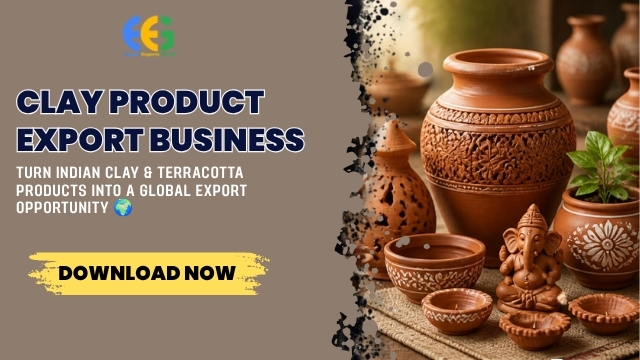
A clay handicrafts export business involves selling handmade or artistically crafted clay products to customers in foreign countries. These products may include decorative pottery, terracotta planters, traditional artwork, candle holders, sculptures, wall décor and selected household products.
India has a long history of pottery and terracotta craftsmanship. Different regions have developed distinctive techniques, patterns, shapes and artistic traditions. Exporters can work with these existing artisan networks to develop products for international markets.
There are several ways to enter this industry:
Merchant exporter: Purchase products from artisans or manufacturers and resell them to international buyers.
Manufacturer exporter: Produce clay handicrafts in your own workshop or factory and export them directly.
Sourcing agent: Help overseas buyers discover suitable Indian artisans and manufacturers.
Private-label supplier: Source products that meet a buyer’s specifications and sell them under the buyer’s brand, subject to an agreed arrangement.
Online handicraft seller: Sell eligible products through international e-commerce platforms.
💡 Beginner tip: A merchant-exporter model can reduce the need for factory investment. However, you still need working capital, supplier agreements, quality controls, packaging arrangements and a clear payment strategy.
🎨 2. Top Clay Handicraft Products to Export from India
Choosing a product is one of the most important steps in developing an export business. Select products based on buyer demand, production capacity, shipping cost, durability and the ability to differentiate your catalogue.
🪴 A. Terracotta Pots and Planters
Terracotta pots and decorative planters are suitable products to research for garden centres, plant shops, home décor retailers and landscaping businesses.
Potential product variations include:
Rustic terracotta containers
Textured designer planters
Decorative sets for homes and balconies
Exporters should check dimensions, weight, drainage holes, finish, dimensional consistency and resistance to handling damage.
🪔 B. Clay Diyas and Candle Holders
Traditional clay diyas and decorative candle holders can be positioned for festive retail, cultural gifting and home decoration.
Possible product lines include traditional diyas, painted candle holders, decorative tealight holders and gift sets.
Buyers may have seasonal purchasing cycles, so exporters should confirm order deadlines, production lead times and delivery dates well in advance.
🏺 C. Decorative Clay Vases
Decorative vases can be developed in different shapes, sizes, textures and colours. Premium finishes, coordinated collections and contemporary designs may help exporters approach boutique décor retailers and interior design businesses.
🗿 D. Terracotta Figurines and Sculptures
Clay animals, cultural figures, abstract sculptures and miniature decorative objects can appeal to specialty gift shops, museum stores and décor retailers.
Exporters should carefully document dimensions, materials, finishes and any handcrafted variations.
🎨 E. Hand-Painted Pottery
Hand-painted pottery can offer product differentiation through original patterns, regional art influences and customized designs.
Potential items include decorative bowls, vases, ornamental plates and display pieces. Where a product is intended for food use, ensure the glaze, paint and materials meet the relevant food-contact requirements.
🏠 F. Clay Wall Décor
Decorative wall plates, relief artwork, masks and terracotta wall ornaments may suit home décor collections.
Because these items can be irregularly shaped, exporters should assess mounting arrangements, weight, breakage risk and protective packaging.
🔔 G. Clay Bells and Decorative Garden Accessories
Clay bells and selected garden ornaments can be explored as distinctive lifestyle and outdoor décor products. Durability and resistance to weather exposure should be evaluated for products marketed for outdoor use.
🎁 H. Customized Corporate Gifts
Customized clay souvenirs, branded decorative pieces and gift sets may help exporters target corporate gifting companies, hospitality businesses and event suppliers.
Personalization can include approved logos, colours, packaging or designs. Always confirm minimum order quantities and production timelines before accepting orders.
🇮🇳 3. Where Can You Source Clay Handicrafts in India?
India has several pottery and terracotta craft traditions. Exporters should investigate artisan clusters, producer groups, cooperatives, workshops and established manufacturers.
Potential sourcing regions include:
West Bengal: Research terracotta craft traditions, including the Bankura region.
Rajasthan: Explore traditional pottery, decorative ceramics and artisan-made products.
Uttar Pradesh: Investigate pottery manufacturers and the Khurja ceramics cluster, distinguishing ceramic products from unglazed terracotta.
Gujarat: Explore regional pottery and traditional clay crafts.
Bihar: Investigate local pottery traditions and suitable artisan suppliers.
Tamil Nadu: Research terracotta craft producers and traditional pottery workshops.
📌 These are starting points for supplier research, not guarantees that every listed region produces every product category at export scale.
Before selecting a supplier, request product samples and verify the following:
Production capacity and monthly output.
Product dimensions, weight and material specifications.
Consistency of colour, shape and finish.
Minimum order quantity (MOQ).
Manufacturing and dispatch timelines.
Experience supplying bulk or international orders.
Quality-control procedures.
Commercial terms and payment arrangements.
A practical approach is to compare at least three suppliers for the same product specification before making a purchase decision.
🌎 4. Potential International Markets for Indian Clay Handicrafts
International market selection should be based on actual import data, retail demand, competition, product positioning and shipping economics.
The following countries are potential markets to investigate, rather than a verified ranking of the largest buyers.
🇺🇸 United States
Research home décor distributors, garden centres, gift wholesalers, independent retailers and online sellers. Assess shipping costs carefully for heavy or fragile products.
🇬🇧 United Kingdom
Potential buyer segments include gift shops, garden retailers, independent homeware stores and specialty décor distributors.
🇩🇪 Germany
Investigate buyers focused on home accessories, garden products, artisan décor and sustainable lifestyle collections. Product quality, packaging and compliance requirements need careful assessment.
🇫🇷 France
Explore boutique home décor stores, gift retailers and interior design businesses interested in distinctive decorative collections.
🇳🇱 Netherlands
Research importers, wholesalers and distributors serving home décor and garden retail channels.
🇨🇦 Canada
Potential customer segments include homeware retailers, garden shops, specialty gift stores and e-commerce businesses.
🇦🇺 Australia
Explore garden accessories, decorative pottery and home décor distributors. Shipping distance, packaging costs and applicable import requirements should be considered.
🇯🇵 Japan
Research buyers of carefully finished pottery, minimalist décor and distinctive handcrafted products. Specifications and consistency may be particularly important for individual buyers.
🇦🇪 United Arab Emirates
Investigate décor retailers, hospitality suppliers, gift distributors and interior design businesses serving residential and commercial projects.
🇸🇦 Saudi Arabia
Explore potential demand among home décor distributors, hospitality suppliers and gift retailers, while verifying applicable import and product requirements.
🔎 How to validate a market: Use official trade statistics and relevant HS-code data to examine import values, supplier countries and market trends. Then contact actual importers and compare their requirements before choosing your target country.
🔍 5. How to Find International Buyers for Clay Handicrafts
Finding suitable buyers is often more challenging than finding products. An effective strategy combines online research, professional outreach, samples and consistent follow-up.
🌐 Use B2B Marketplaces
Research established international and domestic B2B marketplaces to identify buyers, distributors and wholesale enquiries. Verify company details before sharing samples or accepting orders.
💼 Use LinkedIn
Search for job titles and business categories such as:
Garden Product Distributor
Interior Décor Procurement Manager
Retail Purchasing Manager
Review the company’s website, product range and business profile before contacting its purchasing team.
🏪 Research Retailer Websites
Identify stores already selling comparable products. Study their designs, sizes, price positioning, packaging and customer segments.
If your products offer a meaningful difference in design, price, customization or sourcing, prepare a relevant proposal for the buyer.
📧 Send Professional Buyer Emails
A good first email should be concise and personalized. Include:
A short introduction to your business.
The specific product category you supply.
A catalogue or a small selection of product images.
Product specifications and MOQ.
Indicative pricing and delivery terms.
An invitation to discuss samples.
Avoid sending generic bulk messages that do not match the buyer’s business.
🎪 Attend Trade Fairs
Explore relevant home décor, giftware, garden and handicraft trade fairs. Check exhibitor lists and buyer profiles before investing in participation.
📦 Offer Samples Strategically
Samples help buyers evaluate finish, dimensions, weight, colour and packaging. Agree on sample costs, courier charges, delivery time and approval criteria before dispatch.
Pro tip: Maintain a buyer database containing company name, country, website, contact person, product interest, last contact date, quotation status and next follow-up.
📦 6. Export Packaging for Fragile Clay Products
Clay handicrafts can crack, chip or break during handling and transportation. Packaging quality directly affects customer satisfaction and the financial outcome of a shipment.
A reliable packaging process may include:
Individually wrapping each item.
Using suitable cushioning material.
Protecting protruding or delicate parts.
Separating products with internal dividers.
Using strong cartons appropriate to the shipment.
Preventing products from moving inside the carton.
Protecting against moisture where needed.
Labelling packages according to handling and transport requirements.
For large planters or heavy pottery, assess whether reinforced cartons, moulded inserts or suitable wooden packaging are necessary.
Where wood packaging is used for international shipments, check the destination and transport requirements, including applicable ISPM 15 rules.
Conduct packaging trials before shipping commercial quantities. A drop or vibration test appropriate to the packaging and shipping method can help reveal weaknesses.
💡 Remember: A product that looks attractive in a showroom is not necessarily export-ready. Packaging must protect it throughout collection, warehousing, loading, transit and final delivery.
📑 7. Important Export Documents and Compliance
Indian exporters should verify the requirements for their product, shipment, destination and chosen export arrangement.
Common export requirements and documents may include:
IEC: Importer Exporter Code, subject to applicable requirements.
GST compliance: Applicable registration, invoicing and tax procedures.
Commercial Invoice: Details of the seller, buyer, products, quantities, prices and transaction terms.
Packing List: Package-wise details of contents, quantities, dimensions and weights.
Shipping Bill: Export customs declaration filed through the applicable process.
Bill of Lading or Air Waybill: Transport document, depending on the shipping method.
Certificate of Origin: Where required by the buyer, importing country or applicable trade arrangement.
Additional product documents: Where specifically required for the product or destination.
🔢 HS Code Classification
The correct HS classification depends on the product’s material, composition, construction and intended use. Different clay articles may fall under different tariff headings.
Do not assume that all terracotta handicrafts share one HS code. Confirm the classification against the current tariff and the importing country’s requirements before quoting duties or finalizing documents.
🍽️ Special Requirements for Tableware
Clay cups, bowls, plates and other food-contact products may require evidence that their materials, glazes, paints and finishes comply with relevant safety rules.
Decorative products are not automatically suitable for food use. Never market them as food-safe without appropriate verification.
🌿 Environmental and Packaging Considerations
Some buyers may request information about packaging materials, recycled content or restricted substances. Check the actual destination-country rules and contractual specifications rather than assuming one standard applies everywhere.
💰 8. How to Calculate Clay Handicraft Export Costs
Export profitability depends on more than the difference between the supplier’s price and the overseas selling price.
Consider this illustrative example for a hypothetical order of 100 decorative clay vases.
Cost component | Illustrative amount |
|---|
Product purchase: 100 × ₹200 | ₹20,000 |
Protective packaging | ₹4,000 |
Local transportation | ₹2,000 |
Inspection and handling | ₹1,500 |
Documentation and administration allocation | ₹1,500 |
Illustrative pre-export subtotal | ₹29,000 |
These figures are examples only, not current market quotations. Actual expenses will depend on the product, location, order size and service providers.
If the exporter quotes a price that produces ₹40,000 in total revenue for the order, the difference between that revenue and the ₹29,000 subtotal is ₹11,000 before any additional costs not included above.
Those additional costs may include international freight, insurance, customs-related charges under the agreed terms, commissions, finance costs, currency conversion, damage, returns and applicable taxes.
Therefore, ₹11,000 is not necessarily the final profit.
🧮 The Export Costing Formula
Total Product Cost + Packaging + Inland Logistics + Documentation + Freight + Insurance + Applicable Charges + Finance Costs = Total Export Cost
Calculate the quotation according to the agreed Incoterms® rule and clearly identify which party pays each cost.
For fragile products, also assess expected breakage exposure and the cost of replacements or claims.
🚧 9. Risks and Challenges in the Clay Handicrafts Export Business
Every export opportunity comes with operational and commercial risks. Identifying these risks early can help you avoid expensive mistakes.
❌ Breakage During Transportation
Clay products may crack or break during loading, handling or transit.
Solution: Test packaging, inspect samples and establish written packing specifications with suppliers.
🎨 Inconsistent Product Quality
Handmade products naturally vary, but excessive differences in colour, shape or dimensions may cause buyer complaints.
Solution: Agree on acceptable tolerances, approved samples and inspection criteria before production.
💸 Incorrect Export Costing
Freight, packaging and damage costs can reduce margins significantly.
Solution: Obtain current quotations from logistics providers and calculate the complete shipment cost before accepting the order.
🌍 Unverified Buyer Enquiries
Some enquiries may be commercially weak or fraudulent.
Solution: Verify company information, check business references where available, use appropriate contracts and establish secure payment arrangements.
📑 Incorrect HS Classification
A mistaken classification can lead to customs queries, incorrect duty calculations or compliance problems.
Solution: Verify the classification with a qualified customs professional or relevant authority.
📦 High Shipping Costs
Clay products can be heavy relative to their selling value, making freight a major cost component.
Solution: Compare products by value-to-weight ratio, carton efficiency and shipping mode. Consider lightweight decorative items or coordinated product sets where commercially appropriate.
📅 Seasonal Demand
Products associated with festivals or specific retail seasons may have narrow ordering windows.
Solution: Confirm buyer calendars, production lead times and shipping schedules well in advance.
⚠️ Payment and Cash-Flow Problems
Suppliers may require advance payment while overseas buyers request credit.
Solution: Set clear payment milestones, evaluate buyer creditworthiness and avoid committing more working capital than your business can support.
🚀 10. Step-by-Step Plan to Start a Clay Handicrafts Export Business
A structured approach can help new exporters reduce unnecessary investment and improve their chances of finding suitable buyers.
Step 1: Select a product category. Start with a manageable range, such as decorative vases, small terracotta ornaments or candle holders.
Step 2: Research target markets. Review trade data, comparable products, buyer requirements, competition and shipping economics.
Step 3: Find suppliers. Compare manufacturers and artisan groups on quality, production capacity, MOQ, pricing and reliability.
Step 4: Order samples. Examine product quality, dimensions, finish, consistency and packaging.
Step 5: Calculate export costs. Include the relevant inland costs, packing, freight, insurance, documentation and applicable charges.
Step 6: Prepare a catalogue. Include accurate product photos, dimensions, weights, materials, MOQ, lead times and indicative prices.
Step 7: Build a verified buyer list. Focus on importers, distributors, retailers and businesses whose existing product range matches yours.
Step 8: Contact buyers professionally. Send personalized proposals and follow up systematically.
Step 9: Negotiate and confirm terms. Document specifications, quantity, payment, delivery terms, inspection standards and procedures for damaged goods.
Step 10: Execute a trial order. Inspect the goods, test the packaging and coordinate with your customs and logistics partners.
Step 11: Review performance. Evaluate the actual shipment cost, breakage, buyer feedback and net profitability before scaling.
📈 11. Marketing Strategies for Building an International Handicraft Brand
International buyers need a clear reason to choose your products over alternatives. Develop a professional presentation that communicates product quality and commercial reliability.
Useful marketing assets include:
A professional website and digital catalogue.
High-quality product photographs.
Short videos showing craftsmanship and production.
Accurate product descriptions and specifications.
Collections organized by style, size or use.
Customization and private-label options.
Transparent minimum order quantities and lead times.
Supplier-quality and packaging information.
Consistent communication with prospective buyers.
You can also tell the story behind the craftsmanship, provided the information is accurate and the artisans or communities involved have agreed to its use.
For example, a collection can be presented as contemporary home décor inspired by traditional Indian terracotta techniques. This helps buyers understand both the product and its design identity.
🤝 12. Why Product Research and Buyer Research Matter
Many new exporters start by purchasing products they personally like. However, an export business must solve a commercial problem for an overseas buyer.
A retailer may require specific dimensions, a wholesaler may need a competitive price, and an interior design company may need a coordinated collection delivered by a particular date.
That is why product research should come before bulk purchasing.
Study competing products, request buyer feedback, evaluate samples and identify the specifications that matter most to the target market. Then develop a supplier arrangement that can meet those requirements consistently.
A useful business principle is to validate the buyer, product and complete cost before committing to large inventory.
Overall Analysis
The clay handicrafts export business offers Indian entrepreneurs an opportunity to connect traditional craftsmanship with international retail and décor markets. From terracotta planters and decorative vases to hand-painted pottery and customized gifts, multiple product categories can be explored.
However, success requires more than attractive products. Exporters must select suitable suppliers, validate buyer demand, calculate complete costs, protect fragile goods, follow applicable regulations and manage payments carefully.
For beginners, a focused merchant-exporter model can be a practical starting point. Begin with a small catalogue, test the market through buyer outreach and samples, and expand only when your product quality, supply chain and unit economics are proven.
🏺 Your goal should be to build a reliable export business, not simply ship a product overseas.