🧂 1. What Is a Salt Lick?
A salt lick is a solid block or mineral supplement made for animals to lick as part of their feeding routine. Depending on the product, it may contain sodium chloride, mineral compounds, trace elements, vitamins, molasses, or other permitted ingredients.
Salt lick blocks are used in livestock management programs to supplement animal diets. The exact nutritional purpose depends on the formulation, the species, the animal’s age, and the feed already available.
Common applications include:
🐄 Dairy cattle and beef cattle nutrition
🐎 Horse and equine nutrition
🌾 Commercial livestock and ranching operations
Not every salt lick is suitable for every animal. Mineral concentrations, especially certain trace minerals such as copper, must be appropriate for the intended species. For example, sheep can be particularly sensitive to excessive copper.
For exporters, this makes product formulation, clear labeling, and quality control essential parts of the business.
🌍 2. Why Consider Salt Lick Exports from India?
India has an established agricultural, salt-processing, chemical, and animal-feed manufacturing ecosystem. Entrepreneurs can investigate whether domestic suppliers have the production capabilities and certifications needed to manufacture salt lick blocks for international markets.
Potential business advantages include:
🏭 Manufacturing opportunities: Work with existing manufacturers instead of immediately establishing a factory.
📦 Product variety: Explore plain salt blocks, mineral blocks, and specialized livestock supplements.
🤝 B2B sales potential: Approach feed distributors, agricultural wholesalers, livestock suppliers, and private-label brands.
🌐 Private-label opportunities: Investigate supplying products under a buyer’s brand, subject to manufacturing and labeling requirements.
🚢 Repeat-order potential: Feed distributors and agricultural retailers may reorder products when demand, quality, pricing, and inventory turnover support recurring purchases.
These are business possibilities, not guaranteed results. Export demand, profitability, and repeat orders must be validated through actual market research and buyer discussions.
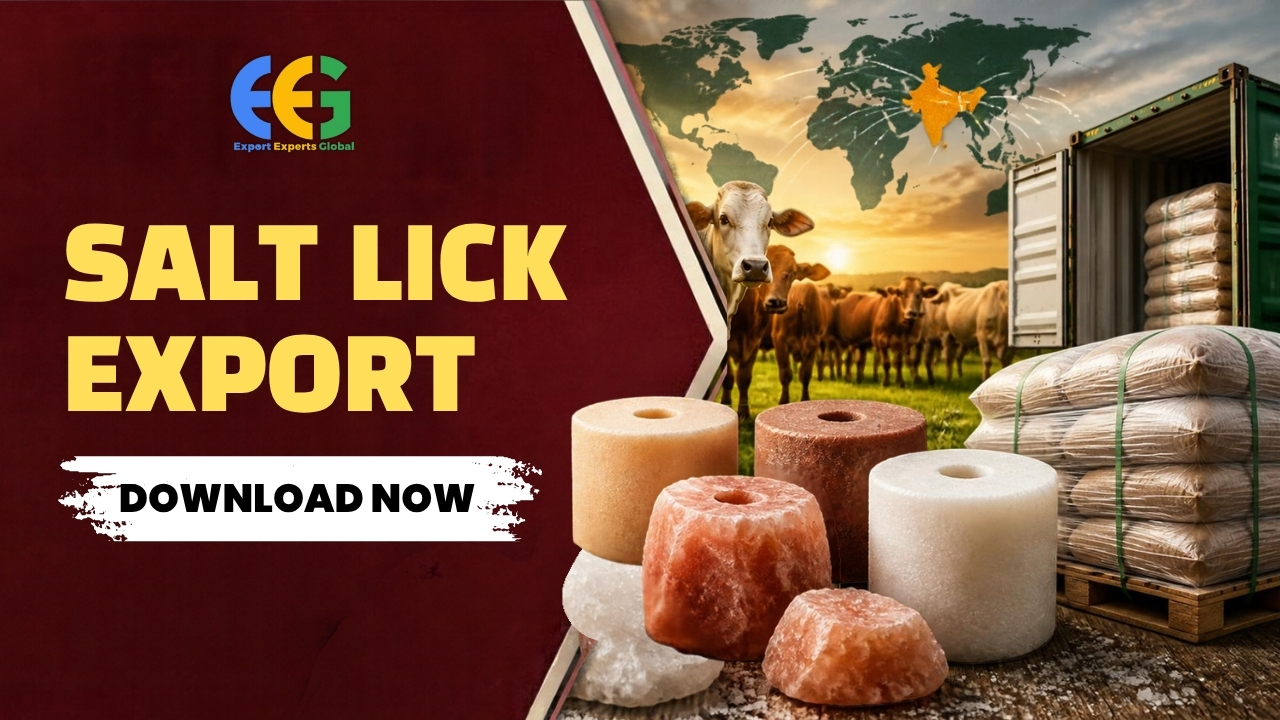
🧱 3. Types of Salt Lick Products You Can Export
Understanding the different product categories helps exporters identify a suitable buyer segment.
1. Plain Salt Lick Blocks 🧂
These primarily supply salt and may be suitable for livestock applications where the formulation meets the buyer’s requirements.
2. Cattle Mineral Lick Blocks 🐄
These may contain selected minerals intended for cattle nutrition programs. Formulations should be matched to the intended use and applicable regulations.
3. Sheep and Goat Mineral Blocks 🐐
These products are formulated for small ruminants. Species-specific mineral levels are important, particularly when considering copper content.
4. Horse Salt Licks 🐎
These are intended for equine use and may be marketed through equestrian suppliers, feed stores, and specialized animal nutrition distributors.
5. Trace Mineral Blocks 🔬
These contain selected trace minerals in specified concentrations. Buyers may request detailed ingredient declarations and laboratory reports.
6. Vitamin and Mineral Blocks 💊
These combine vitamins and minerals, where permitted, to meet a defined nutritional purpose. Their ingredients and claims may trigger additional regulatory requirements.
7. Molasses-Based Mineral Licks 🌿
These formulations may use molasses or other suitable ingredients to improve texture or palatability. Moisture, stability, storage, and transport conditions should be evaluated.
Business tip: Do not select a product only because it appears easy to manufacture. First identify the target buyer, intended animal species, required specifications, applicable registrations, and expected landed cost.
🔎 4. How to Find the Right Export Market
Before targeting international buyers, identify countries where your specific salt lick formulation can legally enter the market and compete commercially.
Potential markets to investigate include:
These countries represent research targets, not a verified ranking of salt lick import demand. Their livestock industries, local manufacturing, import regulations, and distribution networks differ considerably.
📊 How to Validate Demand
Follow these steps before choosing your first destination:
Study trade data: Search official trade statistics and relevant customs classifications to understand imports of salt, mineral preparations, and animal-feed supplements.
Identify competing suppliers: Determine whether the market is supplied by domestic manufacturers or established international brands.
Check regulations: Contact the relevant importing-country authority or qualified regulatory adviser to confirm product admissibility.
Compare landed costs: Include product cost, packaging, inland transport, freight, insurance, duties, and other applicable charges.
Contact potential buyers: Ask distributors about their current product range, purchasing volumes, specifications, and supplier qualification process.
📌 Important: Do not assume all salt lick blocks use the same HS code. Classification depends on composition, intended use, and applicable customs rules. Confirm the correct classification with a qualified customs professional.
🎯 5. Who Buys Salt Lick Blocks?
Salt lick blocks are primarily a B2B product, making buyer identification an important part of export planning.
Potential buyer categories include:
🏪 Animal-feed importers and distributors
🌾 Agricultural supply wholesalers
🐄 Livestock nutrition companies
🐑 Ranch and livestock supply businesses
🥛 Dairy farm supply distributors
🩺 Veterinary product distributors
🏷️ Private-label animal nutrition brands
🛒 Agricultural retailers and feed stores
Not every business in these categories imports salt lick blocks directly. Some purchase from local wholesalers, while others import bulk quantities for distribution.
🤝 How to Find Verified Buyers
Use a structured approach rather than sending the same message to hundreds of companies.
Step 1: Search business directories and trade platforms using terms such as “livestock mineral block importer,” “animal feed distributor,” “mineral lick supplier,” and “cattle nutrition wholesaler.”
Step 2: Visit company websites to check their product range, business address, distribution network, and existing brands.
Step 3: Verify company registration and import capabilities using appropriate official records or reliable business-verification services.
Step 4: Contact the purchasing manager or product sourcing team with a concise introduction.
Step 5: Share a product specification sheet, photographs, packaging details, available test reports, and a quotation based on the buyer’s requirements.
Step 6: Confirm the buyer’s import eligibility, order terms, payment conditions, and documentation requirements before committing funds.
A verified buyer is not simply someone who replies to an email. Verification should include business identity, commercial capability, and a credible purchasing process.
🏭 6. How to Start: Manufacturer or Merchant Exporter?
You do not necessarily need to establish a factory to explore this business.
Model A: Merchant Exporter
In this model, you source finished salt lick blocks from a suitable manufacturer and sell them to an international buyer.
Your responsibilities may include:
Finding a qualified manufacturer
Comparing prices and minimum order quantities
Checking product quality and specifications
Coordinating packaging and labeling
Finding and negotiating with overseas buyers
Managing export documentation and logistics
This model can reduce the initial investment in production equipment, although working capital, samples, testing, compliance, and shipping expenses still need to be considered.
Model B: Manufacturing Exporter
In this model, you manufacture the blocks yourself or establish a production facility with appropriate technical support.
You may need to invest in:
Production machinery and molds
Ingredient storage and handling
Quality-control equipment
Product development and testing
Trained production and quality personnel
Manufacturing requires greater operational oversight. It is particularly important to validate the formulation, production consistency, and regulatory status before selling internationally.
Model C: Private-Label Exporter
You work with a contract manufacturer to supply products under your own brand or the buyer’s brand.
This can be attractive when a distributor wants customized packaging, specific block weights, or a defined formulation. However, branding does not remove your obligations concerning product safety, labeling, traceability, and applicable regulations.
🧪 7. Quality Standards and Product Testing
Quality is central to the long-term success of a livestock nutrition export business.
Buyers may request a Certificate of Analysis (COA), ingredient specifications, production information, or other evidence demonstrating that the product meets their requirements.
Important checks may include:
Composition: Verify salt and mineral concentrations against the approved formulation.
Heavy metals: Test relevant contaminants against applicable limits.
Microbiological quality: Conduct appropriate testing when required by the formulation or destination.
Physical strength: Assess whether the blocks can withstand handling and transport.
Moisture and stability: Evaluate storage conditions, product integrity, and packaging performance.
Label accuracy: Confirm ingredients, intended animal species, feeding directions, batch identification, and warnings where required.
Traceability: Maintain batch records, supplier details, and quality-control documentation.
Do not make unsupported claims such as “100% safe,” “improves milk production,” or “prevents disease.” Any nutritional or health-related claim should be substantiated and permitted in the destination market.
📋 8. Export Documentation and Compliance
The documents required for exporting salt lick blocks depend on their composition, classification, manufacturing process, and destination.
Common documents and checks may include:
📄 Import Export Code (IEC), where applicable
📄 Bill of Lading or Air Waybill
📄 Certificate of Origin, when required or requested
📄 Certificate of Analysis
📄 Ingredient and product specification sheets
📄 Manufacturing or quality certificates, where applicable
📄 Import permits, product registration, or health-related certificates if required by the destination
In India, an exporter should verify applicable requirements with the Directorate General of Foreign Trade, Indian Customs, and the relevant sectoral authorities. Requirements may differ depending on whether the product is treated as an animal-feed supplement, mineral preparation, or another regulated product category.
Never assume that an ordinary commercial invoice and packing list are sufficient. Confirm the product’s regulatory status and import eligibility before accepting a commercial order.
💰 9. How to Calculate Salt Lick Export Costs
Profitability depends on the difference between the export selling price and the total cost of fulfilling the order.
Before quoting an overseas buyer, calculate:
Product purchase or manufacturing cost
Quality testing and inspection
Customs clearance and documentation
Freight and insurance, where applicable
Bank charges and currency-conversion costs
Sales commissions and other transaction expenses
Example of an Export Cost Calculation
The following is an illustrative calculation, not a current market quotation.
Cost component | Example amount |
|---|
Product cost | ₹60,000 |
Packaging and labeling | ₹8,000 |
Testing and inspection | ₹4,000 |
Inland transport and handling | ₹6,000 |
Documentation and other expenses | ₹7,000 |
Total estimated cost | ₹85,000 |
Suppose the total export revenue is ₹1,00,000.
The ₹15,000 difference is not necessarily net profit. Any omitted expenses, financing costs, taxes, unexpected freight charges, or other liabilities must still be considered.
Export Profit = Export Revenue − Total Applicable Costs
Use actual supplier quotations, freight rates, buyer specifications, and payment terms before making an investment decision.
📦 10. Packaging and International Logistics
Salt lick blocks can be heavy, so packaging and transportation directly influence the competitiveness of your export quotation.
Consider the following factors:
Individual packaging: Use suitable packaging to protect the product and provide the required product information.
Moisture protection: Select packaging that protects the formulation under expected storage and transport conditions.
Carton strength: Ensure outer cartons can withstand stacking and handling.
Palletization: Evaluate pallets and load stability for larger consignments.
Container utilization: Calculate how product weight and dimensions affect freight costs and container loading.
Storage: Follow manufacturer-recommended temperature and humidity conditions.
Labeling: Include required ingredient declarations, net weight, batch number, manufacturer details, and other destination-specific information.
Ask a freight forwarder to compare shipment options based on weight, dimensions, destination, and delivery terms.
For heavy, relatively low-value products, transportation costs can significantly affect the final selling price. A product that appears profitable at the factory gate may become uncompetitive after freight and destination charges.
⚠️ 11. Risks and Challenges in the Salt Lick Export Business
Every export business involves commercial and operational risks. Salt lick exporters should evaluate the following challenges before investing in inventory.
1. Regulatory Restrictions 📋
A formulation accepted in India may not be approved in another country. Incorrect classification, missing permits, or unsuitable ingredients can lead to shipment delays or rejection.
Risk management: Verify product admissibility, ingredient restrictions, registration requirements, and documentation before production.
2. Product Quality Problems 🧪
Incorrect mineral concentrations or contamination can compromise animal safety and damage your business reputation.
Risk management: Work with qualified manufacturers, maintain batch traceability, and arrange appropriate laboratory testing.
3. Moisture and Product Damage 🌦️
Unsuitable packaging or storage may affect block integrity and product quality.
Risk management: Conduct packaging assessments and select moisture protection suitable for the formulation and transport conditions.
4. High Freight Costs 🚢
Heavy blocks can be expensive to transport, especially over long distances.
Risk management: Compare freight quotations, optimize packaging dimensions, and calculate the full landed cost before quoting.
5. Strong Market Competition 🌍
Established suppliers may have distribution networks, recognized brands, and competitive production costs.
Risk management: Differentiate through consistent quality, reliable supply, suitable packaging, transparent documentation, and responsive customer service.
6. Payment and Buyer Fraud 🤝
Unverified buyers may submit misleading purchase orders, delay payment, or fail to meet contractual obligations.
Risk management: Verify the company, define payment terms in writing, and evaluate appropriate payment-security mechanisms.
7. Incorrect Product Claims 📢
Unsupported claims about animal health or production benefits may create regulatory and reputational problems.
Risk management: Use substantiated product descriptions and obtain appropriate technical and regulatory review.
8. Working Capital Pressure 💳
Manufacturers may require advance payment while overseas buyers request credit.
Risk management: Prepare a cash-flow plan that includes production, testing, shipping, and payment delays before accepting a large order.
📈 12. A Practical 30-Day Action Plan for Beginners
You can use the following roadmap to assess the business before making a major investment.
Days 1–7
Research the Product
Identify suitable salt lick types, intended animal species, formulations, potential manufacturers, and the technical specifications buyers expect.
Days 8–14
Validate Markets and Compliance
Shortlist destination countries, investigate import regulations, review relevant trade data, and identify potential distributors.
Days 15–21
Obtain Samples and Quotations
Compare manufacturers, evaluate product specifications, arrange necessary testing, and calculate estimated export costs.
Days 22–30
Approach Buyers
Send targeted proposals to verified distributors, request feedback, and discuss sample approval, order quantities, packaging, and payment terms.
This is a suggested research schedule, not a guarantee that you will secure an export order within 30 days. Product registration, laboratory testing, and buyer approval may take longer.
🚀 13. How to Build a Sustainable Export Business
The objective should not be to complete just one shipment. A sustainable business depends on maintaining customer trust and delivering consistent quality.
Focus on five priorities:
Product research: Understand which formulations buyers actually need.
Supplier selection: Choose manufacturers capable of consistent production and documentation.
Buyer development: Build relationships with legitimate distributors and purchasing teams.
Quality assurance: Maintain specifications and batch consistency across orders.
Financial discipline: Calculate landed costs, protect cash flow, and negotiate realistic payment terms.
A small, properly validated order may be a better starting point than purchasing a large quantity of inventory without confirmed demand.
Overall Analysis
🧂 Salt lick blocks offer Indian entrepreneurs a potential entry point into the livestock nutrition and agricultural supply trade. Whether you choose to become a merchant exporter, manufacturer, or private-label supplier, your first priority should be to validate the commercial opportunity.
Remember this export formula:
Product Research + Verified Buyers + Export Documentation + Quality Standards + Global Marketing + Smart Logistics = Sustainable Export Business
Research → Source → Connect → Export.
If you are exploring the salt lick export business, begin with a clear product specification, a reliable supplier, a verified buyer profile, and a realistic cost calculation.