🌍 What Are Compostable Bags?
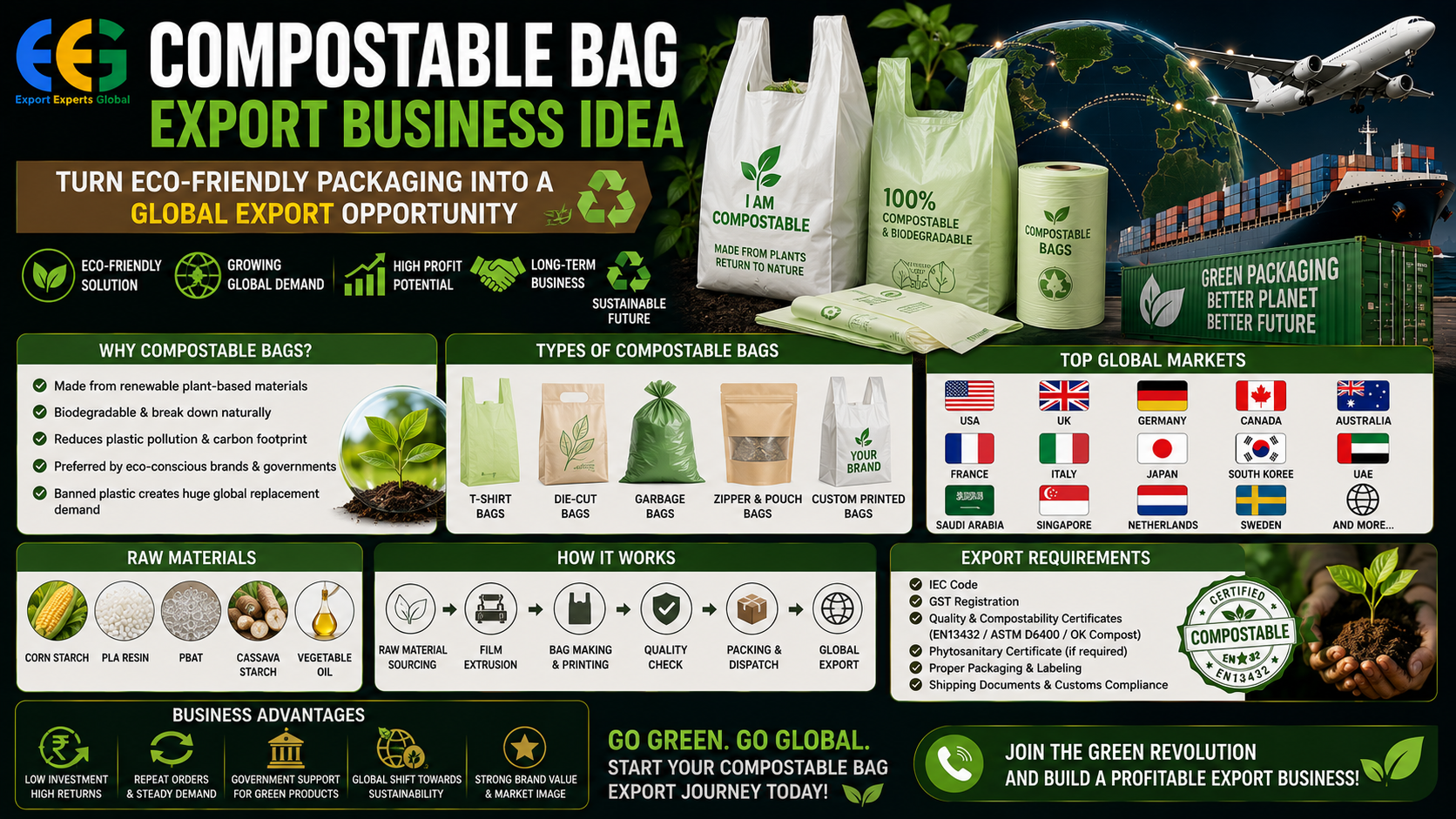
Compostable bags are eco-friendly packaging products designed to decompose into natural elements under industrial or home composting conditions, depending on their material and certification. Unlike conventional plastic, they break down into water, carbon dioxide, and biomass without leaving harmful microplastics behind.
These bags are commonly manufactured using biodegradable polymers and plant-based materials such as:
🌽 Corn Starch
🌾 Cassava Starch
🌿 PLA (Polylactic Acid)
🌱 PBAT Blends
🍃 Other certified biodegradable compounds
Their increasing popularity is driven by environmental awareness, government policies, and corporate sustainability goals.
📈 Why Is the Global Demand Growing?
Several global trends are driving demand for compostable packaging.
✅ Plastic reduction policies
🌍 Corporate ESG commitments
♻️ Sustainable retail packaging
🍽️ Food delivery expansion
📦 E-commerce growth
🌱 Organic waste collection programs
Many countries now require businesses to reduce plastic waste, creating a stable market for certified compostable products.
🇮🇳 Why India Has a Competitive Advantage
India offers several strengths for exporting compostable bags.
✅ Competitive manufacturing costs
✅ Skilled production workforce
✅ Growing biodegradable polymer industry
✅ Strong export infrastructure
✅ Access to major international ports
✅ Government support for exports
These factors enable Indian exporters to compete effectively in global markets.
🛍️ Types of Compostable Bags
Indian manufacturers produce a wide variety of compostable bags for international buyers.
🛒 Shopping Bags
🍽️ Food Delivery Bags
🥡 Takeaway Packaging Bags
📦 Courier Bags
🗑️ Garbage Bags
🌿 Organic Waste Bags
🥬 Grocery Produce Bags
💊 Pharmacy Carry Bags
👕 Garment Packaging Bags
Customized branding and private-label manufacturing also create additional business opportunities.
🌎 Best Countries to Export Compostable Bags
Several international markets continue to import eco-friendly packaging products.
🇩🇪 Germany
🇫🇷 France
🇮🇹 Italy
🇪🇸 Spain
🇳🇱 Netherlands
🇦🇺 Australia
🇨🇦 Canada
🇺🇸 United States
🇯🇵 Japan
🇦🇪 UAE
🇸🇬 Singapore
🇬🇧 United Kingdom
These countries have strong sustainability policies and growing demand for compostable packaging.
🏭 Best Manufacturing States in India
Reliable sourcing is the foundation of a successful export business.
Top manufacturing regions include:
📍 Gujarat
📍 Maharashtra
📍 Tamil Nadu
📍 Karnataka
📍 Delhi NCR
📍 Telangana
📍 Haryana
Choose manufacturers with international certifications and consistent production quality.
💰 Profit Potential
Profit depends on product size, thickness, customization, packaging, certification, and order volume.
Typical business model:
💵 Bulk procurement
📦 Customized branding
🚢 Container exports
📈 Long-term buyer contracts
Many exporters improve margins by offering customized printing and private labeling.
📑 Documents Required
Every exporter should maintain proper documentation.
✅ Import Export Code (IEC)
✅ GST Registration
✅ Commercial Invoice
✅ Packing List
✅ Shipping Bill
✅ Bill of Lading
✅ Certificate of Origin
✅ Export Contract
Depending on buyer requirements, additional compliance documents may also be required.
🌿 Important Certifications
Certification plays a major role in this business.
Common certifications include:
✔ EN 13432
✔ ASTM D6400
✔ OK Compost
✔ BPI Certification
✔ ISO Standards
✔ Laboratory Test Reports
International buyers generally prefer certified products.
🚢 Shipping Options
Compostable bags can be exported through:
🚢 Full Container Load (FCL)
📦 Less than Container Load (LCL)
✈️ Air Cargo for urgent shipments
Sea freight remains the most economical option for large-volume exports.
🔍 How to Find International Buyers
Successful exporters use multiple buyer-generation methods.
🌍 B2B Marketplaces
📧 Direct Email Marketing
🤝 International Trade Fairs
💻 LinkedIn Networking
🏢 Importer Databases
📱 Digital Marketing
Consistency and professional communication are key to building long-term relationships.
🎯 Industries That Buy Compostable Bags
Potential customers include:
🍽️ Restaurants
🛒 Supermarkets
🥗 Organic Food Stores
📦 E-commerce Companies
🏨 Hotels
🏥 Hospitals
🥬 Vegetable Retailers
🧴 Cosmetic Brands
👗 Fashion Retailers
Private-label opportunities are especially popular among retailers.
📦 Product Customization
Many buyers require customized products.
Options include:
🎨 Custom Printing
🏷️ Private Labels
📐 Different Sizes
🎯 Brand Logos
🌿 Eco-friendly Designs
Customization helps increase export value.
⚠ Challenges in This Business
Like any export business, compostable bags also have challenges.
⚠ Price competition
⚠ Certification costs
⚠ Raw material price fluctuations
⚠ Quality consistency
⚠ Freight cost changes
⚠ Buyer compliance requirements
Managing these factors effectively improves long-term success.
💡 Tips for New Exporters
✔ Learn export documentation.
✔ Understand Incoterms.
✔ Verify every buyer.
✔ Focus on product quality.
✔ Offer timely delivery.
✔ Build long-term partnerships.
✔ Stay updated with environmental regulations.
Overall Analysis
Global sustainability initiatives indicate strong long-term growth.
Governments are encouraging businesses to reduce plastic waste, while multinational companies are investing heavily in eco-friendly packaging.
As environmental awareness increases, certified compostable packaging is expected to remain in high demand across industries.
For exporters willing to invest in quality, compliance, and professional buyer relationships, compostable bags represent a promising long-term business opportunity.