What Is Lithium Grease?
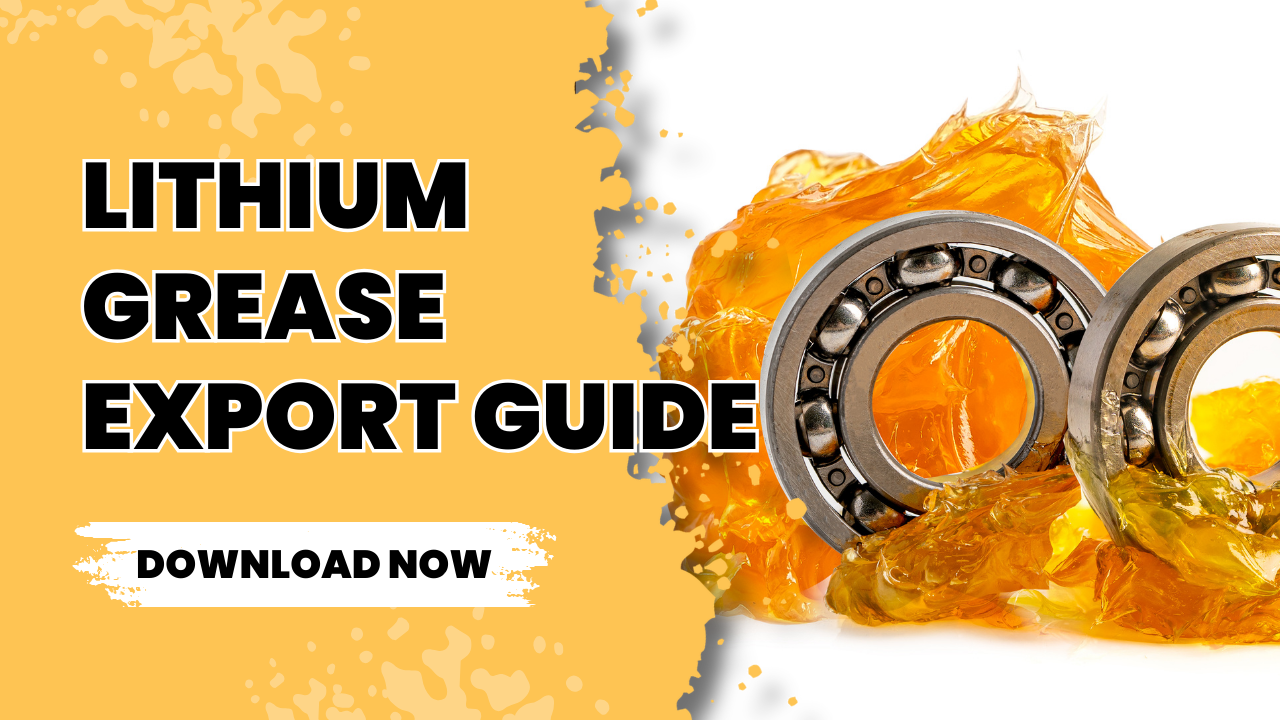
Lithium grease is a semi-solid lubricant made by combining lithium soap thickeners with base oils and performance-enhancing additives. The lithium soap acts as a structural framework that holds the oil in place, creating a stable and durable lubrication matrix.
This structure allows the grease to:
Withstand mechanical stress
Maintain consistency under load
Resist oil separation
Provide long-lasting lubrication
Because of these properties, lithium grease is often the preferred general-purpose grease in both automotive and industrial sectors.
Key Properties of Lithium Grease
Understanding its performance characteristics is essential when dealing with international buyers.
High Temperature Resistance
Lithium grease typically performs well from -20°C to 120°C, with short-term resistance up to 160°C. It maintains structural integrity without melting or breaking down easily.
Mechanical Stability
It offers excellent shear stability, meaning the grease structure remains intact even under heavy loads and continuous operation.
Water Resistance
Lithium grease forms a protective barrier against moisture, helping prevent rust and corrosion in humid or wet environments.
These combined properties make it suitable for diverse applications worldwide.
Common Applications Across Industries
Automotive Sector
Used in:
Lithium grease is widely used in both passenger and commercial vehicles due to its balanced performance and cost-effectiveness.
Industrial Machinery
Applied in:
Electric motors
Conveyor systems
Pumps
Gearboxes
Manufacturing facilities rely on lithium grease for dependable lubrication with extended maintenance intervals.
Construction Equipment
Heavy machinery such as excavators, loaders, and cranes operate under extreme pressure. Lithium grease provides durability in harsh working conditions.
Understanding NLGI Grades for Export Markets
Grease consistency is classified by the National Lubricating Grease Institute (NLGI). International buyers usually specify grease by NLGI grade.
NLGI 000–00
Very fluid consistency, suitable for centralized lubrication systems and low-temperature environments.
NLGI 0–1
Soft grease used in enclosed gearboxes or systems requiring easy pumpability.
NLGI 2
The most commonly exported grade. Ideal for general-purpose automotive and industrial applications.
NLGI 3–4
Firm consistency used in high-speed bearings and applications where leakage control is critical.
For export success, offering NLGI 2 in industrial packaging is often the most commercially viable starting point.
HS Code Classification for Export
Lithium grease is typically classified under:
HS Code 2710.19.90 – Lubricating preparations containing petroleum oils.
In some cases, formulations may fall under:
HS Code 3403.19.00 – Lubricating preparations not elsewhere specified.
Always confirm the correct HS classification with your customs broker, as requirements may vary by country.
Essential Export Documentation
International buyers expect complete compliance documentation. Missing paperwork can delay shipments and damage credibility.
1. Material Safety Data Sheet (MSDS)
Must include chemical composition, hazard classification, safe handling procedures, and comply with GHS standards.
2. Certificate of Analysis (COA)
Batch-specific test results confirming NLGI grade, drop point, penetration value, and other technical parameters.
3. ISO Certifications
Commonly required certifications include:
ISO 9001 – Quality management
ISO 14001 – Environmental management
ISO 45001 – Occupational health and safety
4. REACH Compliance (For EU Markets)
Exporters supplying the European Union must comply with chemical regulations under European Chemicals Agency (ECHA).
Proper documentation increases buyer confidence and supports premium pricing.
Packaging Formats for International Buyers
Packaging plays a significant role in export positioning.
400g Cartridges
Common in automotive workshops and retail markets.
18kg Pails
Popular for industrial customers requiring moderate volume.
180kg Drums
Standard bulk packaging for manufacturing facilities.
Bulk Tanker or IBC Supply
Suitable for large OEM clients and high-volume buyers.
For export markets, durable packaging with clear labeling is critical to avoid transit damage.
Compliance and Labeling Standards
Lithium grease may fall under transport regulations depending on formulation.
Hazard Classification
Label Requirements
Labels should include:
Transport documentation may include IATA (air freight) or IMDG (sea freight) declarations.
Proper labeling avoids customs delays and ensures regulatory compliance.
Major Import Markets
Global demand for lithium grease continues to grow steadily.
Top importing countries include:
United States
Germany
China
Japan
South Korea
The automotive sector accounts for the largest share of consumption, followed by industrial equipment and construction machinery.
Pricing and Profit Potential
Average FOB pricing for NLGI 2 lithium grease in industrial packaging ranges around competitive global benchmarks, depending on base oil pricing and additive costs.
Well-managed exporters with proper certification and logistics systems can achieve attractive gross margins, particularly when targeting OEM and industrial buyers.
Value-added positioning — including private labeling, customized packaging, and technical support — can further increase profitability.
Final Thoughts
Lithium grease remains one of the most versatile and commercially viable lubricants in the global market. Its wide range of applications, consistent demand, and relatively stable formulation make it an ideal product for export-focused lubricant businesses.
Success in this segment depends on:
Consistent product quality
Accurate NLGI grading
Complete export documentation
Regulatory compliance
Strong logistics planning
For manufacturers and traders looking to expand internationally, lithium grease offers a practical entry point into the global lubrication market.