

Best Import Export Business Course in Mumbai – Join Export Experts Global
Best Import Export Business Course in Mumbai – Join Export Experts Global If you are searching for a practical..
If you are searching for a practical import export business course in Mumbai, export import training in Mumbai, or a program that can help you understand how international trade works from product selection to shipment execution, Export Experts Global offers a practical training approach focused on real-world export-import operations.
Mumbai is one of India’s major commercial and logistics centres, making it an important location for learning about international trade, export documentation, shipping, customs clearance, freight forwarding, global buyers and suppliers, and international logistics. For aspiring exporters and entrepreneurs, understanding the complete export process is more important than simply learning theoretical concepts.
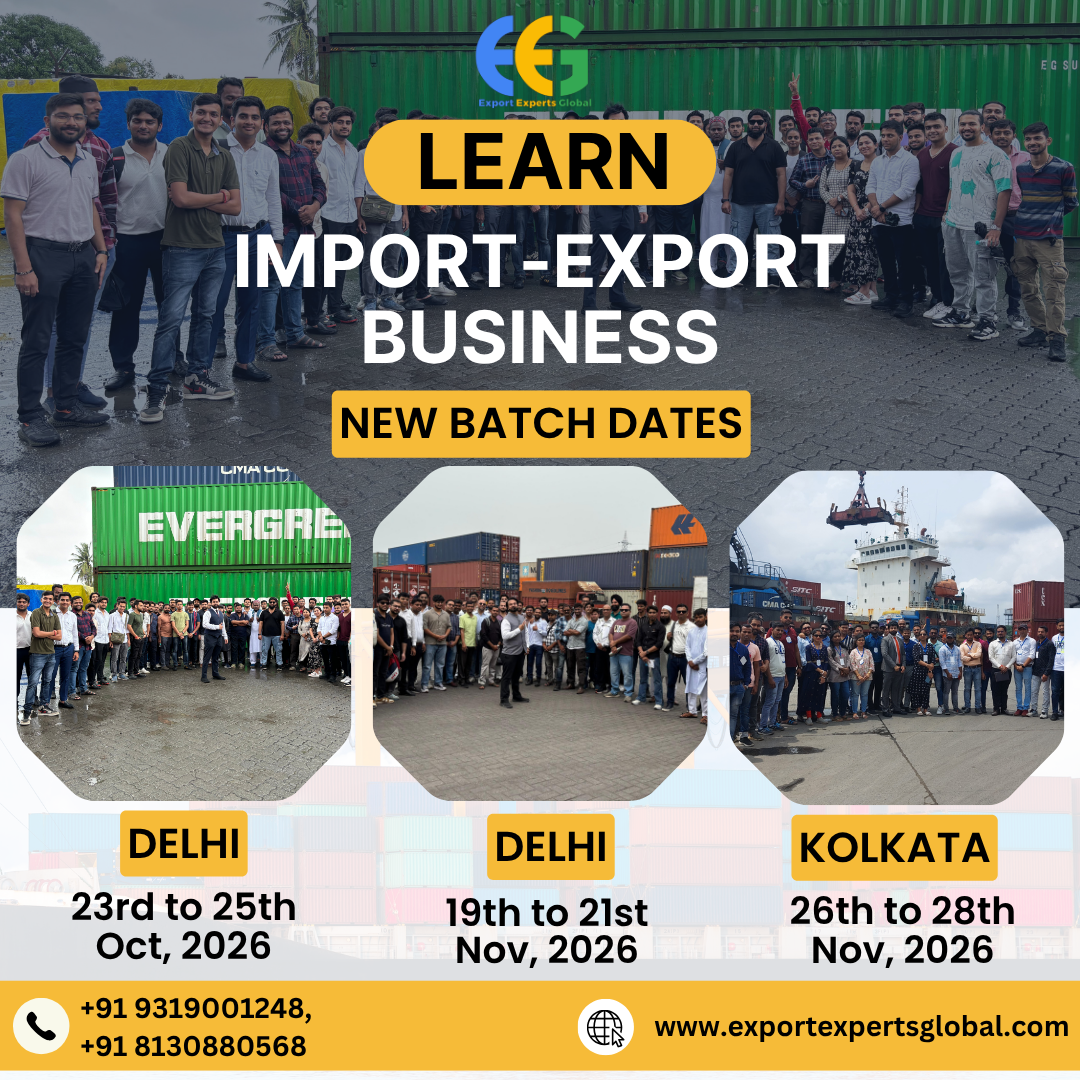
Export Experts Global promotes its program around practical import-export training with a port visit, covering areas such as product selection, IEC and GST, export documentation, international buyer finding, payment terms, packaging, logistics, customs clearance and government incentives.
Starting an import export business from India can look complicated when you are new to international trade. You may have questions such as:
A structured import export course in Mumbai can help beginners understand these processes systematically instead of trying to learn every stage separately.
Export Experts Global’s published training material includes buyer/supplier identification, communication, export-import documentation, pricing and costing, certifications, e-commerce exports and practical visits.
Mumbai has a strong connection with India’s international trade, shipping, logistics and business ecosystem. Learning export-import operations in a commercial environment can help students understand how different stakeholders work together.
An international shipment can involve:
Exporter → Buyer → Freight Forwarder → Customs → Shipping Line/Airline → Port/CFS/ICD → Destination Country
Understanding this complete chain is essential for anyone planning to build an export business in India.
A good export import training course in Mumbai should therefore go beyond definitions and explain the actual workflow.
📦 Product Selection
🌍 International Market Research
🔎 Buyer Finding
🤝 Supplier Finding
📄 Export Documentation
💰 Export Costing & Pricing
🏦 International Payments
🚢 Shipping & Logistics
🛃 Customs Clearance
📑 Compliance & Certifications
📈 Global Marketing
🤖 Digital & AI Tools
🏭 Practical Market Exposure
Export Experts Global positions its Mumbai program as practical rather than theory-focused. Its current promotional material describes training covering product selection, GST, IEC, documentation, buyer finding, payment terms, packaging, logistics, customs clearance and government incentives.
The institute’s published course material also includes practical documentation and certification topics such as Proforma Invoice, Certificate of Origin, Commercial Invoice, Packing List and Bill of Entry, along with certifications such as inspection, fumigation, FSSAI and Halal where applicable.
This type of curriculum can be particularly useful for:
One of the first decisions in an export business from India is selecting the right product.
India has significant manufacturing and agricultural capabilities across categories such as:
But not every product is suitable for every country.
You need to study product demand, competition, pricing, regulations, certifications, logistics and buyer requirements before entering a market.
A successful exporter does not simply choose a country because it appears attractive.
Market research involves understanding:
Product + Country + Demand + Competition + Regulations + Buyer Profile + Pricing + Logistics
Students can learn how to identify potential export markets and evaluate whether a product has international demand.
For example, an Indian manufacturer may have a good product but discover that the target market requires specific packaging, labelling, certification or technical standards.
Understanding these requirements before approaching buyers can reduce avoidable mistakes.
One of the biggest questions beginners ask is:
International buyer development is an important part of export marketing.
Potential approaches can include:
🌐 B2B marketplaces
🔎 Search engines
🏢 Importer directories
🤝 Trade fairs
📧 Direct email marketing
💼 LinkedIn
🏛️ Trade associations
📊 Import data research
🌍 Distributor networks
📱 Digital marketing
Export Experts Global’s published curriculum specifically covers finding buyers and suppliers, buyer/supplier communication, checking whether buyers or suppliers are genuine, and accessing buyer/supplier data.
Before beginning international trade, entrepreneurs need to understand the applicable registrations and compliance requirements.
A practical export import course should explain concepts such as:
The exact requirements can differ depending on the product, transaction structure and destination market, so exporters should verify current requirements with the relevant authorities before executing a shipment.
Documentation is one of the most important components of an export-import business.
Depending on the transaction, documents may include:
📄 Commercial Invoice
📦 Packing List
🧾 Proforma Invoice
🚢 Shipping Bill
📜 Bill of Lading
✈️ Air Waybill
🌍 Certificate of Origin
🏦 Bank Documents
📋 Inspection Certificate
🌿 Phytosanitary Certificate where applicable
🧪 Test Reports where applicable
📑 Other product-specific certificates
Export Experts Global’s course material specifically includes practical preparation of export-import documents and certifications.
Many new exporters make mistakes because they calculate only the manufacturing or purchase price.
Export costing may need to consider:
Product Cost + Packaging + Transportation + Documentation + Customs/Port Charges + Freight + Insurance + Bank Charges + Other Applicable Costs = Export Cost
Then the exporter needs to determine an appropriate selling price based on the agreed Incoterm and transaction structure.
Understanding export costing is essential for protecting margins and making commercially realistic quotations.
Payment risk is another major area in international trade.
An export-import training program should introduce entrepreneurs to commonly used payment mechanisms and trade-finance concepts such as:
💳 Advance Payment
🏦 Letter of Credit
📄 Documents Against Payment
📑 Documents Against Acceptance
💸 Telegraphic Transfer
🤝 Open Account
Each method has different implications for risk, cash flow, documentation and buyer-seller relationships.
The correct payment arrangement depends on the transaction and commercial circumstances.
Understanding Incoterms is critical for exporters and importers.
Common terms include:
Incoterms help define responsibilities relating to delivery, costs and risk between buyer and seller.
A practical import-export course should explain these concepts using actual shipment examples rather than only memorising definitions.
International trade does not stop after finding a buyer.
The exporter needs to understand the movement of cargo from the supplier’s location to the destination.
A simplified process can look like:
Supplier → Factory/Warehouse → Transport → CFS/Port → Customs → Shipping Line → Vessel → Destination Port → Import Customs → Buyer
Understanding the role of freight forwarders, customs brokers/CHAs, shipping lines, CFS facilities, ports and logistics providers is therefore important.
One of the key features promoted by Export Experts Global is practical learning with a port visit. Its published material also references practical visits such as ICD, market visits, cold-storage visits and international trade-fair visits, subject to the specific program.
A practical visit can help learners connect classroom concepts with the physical movement of cargo.
Instead of only reading about:
Container + Shipping Line + Customs + CFS + Documentation
learners can observe how the international logistics ecosystem operates.
Students interested in international business, logistics, shipping, supply chain and export-import careers can use structured training to understand the industry.
Professionals looking to move into export-import companies, logistics companies, freight forwarding, shipping or international trade can develop foundational knowledge.
Manufacturers can learn how to move from domestic sales toward international markets and direct exports.
Existing traders can explore international sourcing and selling opportunities.
Anyone planning to start an export business from India can learn the complete workflow before investing heavily.
You do not necessarily need years of international trade experience to start learning. A structured beginner-level course can introduce the terminology, documentation and processes step by step.
Learning international trade is only the beginning.
A practical approach should help you understand the complete business cycle:
Select a Product
⬇️
Research International Markets
⬇️
Identify Potential Buyers
⬇️
Verify Buyer Requirements
⬇️
Prepare Product & Pricing
⬇️
Negotiate Payment & Incoterms
⬇️
Prepare Export Documentation
⬇️
Arrange Logistics
⬇️
Customs Clearance
⬇️
Ship the Goods
⬇️
Complete Payment & Documentation
⬇️
Build Repeat International Business
This is the practical mindset required for building a sustainable export-import business in India.
The difference between simply watching an online video and attending structured export-import business training is the opportunity to understand the entire process in an organised manner.
For beginners, terminology such as:
HS Code, IEC, GST, AD Code, RCMC, Incoterms, FOB, CIF, BL, AWB, Shipping Bill, Bill of Entry, CFS, Freight Forwarder and Customs Clearance
can initially seem complicated.
A practical training program can break these concepts into individual steps and connect them to actual business situations.
Mumbai is deeply connected to India’s commercial and logistics ecosystem. The city has a large network of businesses involved in:
🚢 Shipping
📦 Logistics
🏦 Banking
🛃 Customs
🏭 Manufacturing
🌍 International Trade
📊 B2B Commerce
✈️ Air Cargo
🚚 Transportation
Other Mumbai-based institutes also offer international-trade programs covering areas such as documentation, foreign exchange, customs, logistics and business operations, demonstrating the range of export-import education available in the city.
Therefore, when selecting an import export course in Mumbai, students should compare the curriculum, practical exposure, instructor experience, support structure, duration, fees and current batch details.
Export Experts Global’s promotional material emphasises “Learn Import Export Business Practically” and a port-visit component.
The organisation’s published curriculum includes:
✅ Product selection
✅ Buyer & supplier finding
✅ Buyer verification
✅ Export-import communication
✅ Export pricing
✅ E-commerce exports
✅ Export documentation
✅ Certifications
✅ Practical visits
Its 2026 Mumbai training promotion also describes coverage of GST, IEC, documentation, buyer finding, payment terms, packaging, logistics, customs clearance and government incentives.
International trade is not simply about buying a product cheaply and selling it overseas.
A successful export business from India requires an understanding of:
Product Research + Verified Buyers + Export Documentation + Quality Standards + Global Marketing + Smart Logistics = Successful Export Business From India
The right training can help beginners understand these components before attempting their first international transaction.
If your goal is to learn import export business practically in Mumbai, explore the Export Experts Global program and verify the latest Mumbai batch dates, venue, curriculum and availability directly with the institute before registering.
🌍 Learn. Understand. Execute. Build Global Trade Opportunities.
Call / WhatsApp: +91 9205908400 | +91 8130880568
Website: Export Experts Global
Import Export Course in Mumbai, Import Export Training in Mumbai, Export Import Course Mumbai, Import Export Business Course Mumbai, Best Import Export Course in Mumbai, Export Import Training Mumbai, Import Export Classes in Mumbai, Export Business Course Mumbai, Import Export Institute Mumbai, Export Import Business Training Mumbai.
Best import export business course in Mumbai, practical import export training in Mumbai, import export course with port visit Mumbai, how to start export business from India, export import business training for beginners, import export course for entrepreneurs, export business training Mumbai, international trade course Mumbai, export documentation course Mumbai, export import certification course Mumbai, practical export training India, learn export import business practically.
Export business from India, import business from India, international trade training, global business course, export documentation training, international buyer finding, export buyer finding course, export costing training, customs clearance training, shipping and logistics course, international trade course, export business ideas, how to find international buyers, how to start import export business, IEC registration training, export documentation India, international business training, global trade training, export marketing course, export-import career, export-import entrepreneur, export business training for beginners.
Best Import Export Business Course in Mumbai – Join Export Experts Global If you are searching for a practical..

🌍 Indian Fruits & Vegetables Export: Pesticide Residue Compliance, MRLs & Global Market Requirements India is one of the..

📦 Stretch Film Export Business from India: Complete Guide to Starting a Profitable Global Packaging Business Stretch film is..