🌱 What is Biofuel?
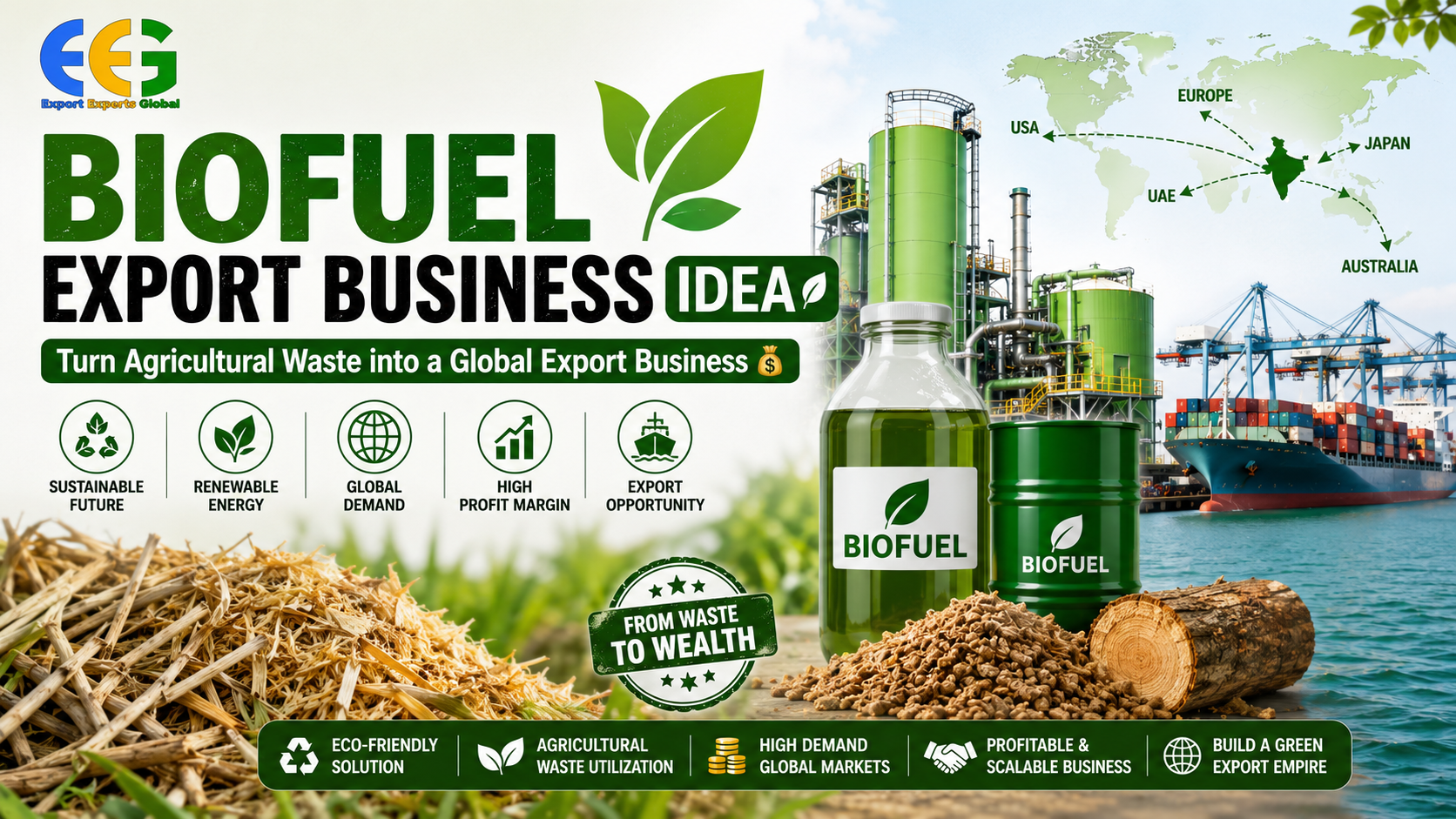
Biofuel is renewable fuel produced from biological materials such as agricultural residues, forest waste, vegetable oils, organic waste, and energy crops. Unlike coal or petroleum, biofuels can be replenished naturally and produce significantly lower greenhouse gas emissions.
Common biofuel products include:
✅ Biomass Pellets
✅ Biomass Briquettes
✅ Bioethanol
✅ Biodiesel
✅ Sustainable Aviation Fuel (SAF) Feedstock
✅ Bio-CNG Feedstock
✅ Wood Pellets
✅ Agricultural Waste Pellets
These products are used in power plants, district heating systems, industrial boilers, cement plants, steel manufacturing, and commercial heating facilities across the globe.
🌾 Why India is a Strong Biofuel Exporter
India possesses several competitive advantages that make it an attractive sourcing destination for global buyers.
Large Agricultural Production
India generates enormous quantities of agricultural residue every year, ensuring year-round availability of biomass.
Cost-Effective Manufacturing
Lower labour costs and abundant raw materials help Indian manufacturers remain globally competitive.
Expanding Renewable Energy Sector
Government initiatives promoting renewable energy encourage investments in biomass processing and clean fuel production.
Strong Export Infrastructure
India has well-developed ports, logistics providers, container terminals, and export support systems that facilitate international shipments.
🌍 Global Demand for Biofuel
Demand for renewable fuel is increasing rapidly due to:
♻️ Carbon neutrality goals
🌍 Climate change commitments
⚡ Transition away from coal
🏭 Industrial decarbonization
🚢 Sustainable shipping initiatives
✈️ Green aviation fuel development
Many countries are replacing fossil fuels with biomass-based energy in industries and power generation.
🌎 Top Countries Importing Biofuel
Indian exporters can target several promising international markets.
🇳🇱 Netherlands
A major European logistics hub with extensive biomass imports.
🇩🇪 Germany
One of Europe’s largest renewable energy markets.
🇩🇰 Denmark
Invests heavily in biomass heating and sustainable energy.
🇮🇹 Italy
Imports biomass fuels for industrial heating.
🇬🇧 United Kingdom
Increasing demand for biomass pellets in power generation.
🇯🇵 Japan
Strong importer of certified biomass pellets.
🇰🇷 South Korea
Growing renewable energy targets create significant demand.
🇸🇬 Singapore
Regional trading hub for renewable fuel products.
🌿 Raw Materials Used in Biofuel Manufacturing
India offers a wide variety of biomass sources.
🌾 Rice Husk
🌾 Paddy Straw
🌾 Sugarcane Bagasse
🌾 Wheat Straw
🌾 Cotton Stalk
🌾 Bamboo Residue
🌾 Sawdust
🌾 Coconut Shell
🌾 Groundnut Shell
🌾 Corn Cob
🌾 Coffee Husk
🌾 Mustard Stalk
🌾 Forestry Waste
Each material has unique calorific value and ash characteristics that influence buyer preference.
🏭 Major Biofuel Products for Export
Biomass Pellets
Widely used in industrial boilers and power generation.
Biomass Briquettes
Compressed agricultural waste suitable for industrial heating.
Bioethanol
Produced from sugar, corn, or agricultural feedstock.
Biodiesel
Manufactured using vegetable oils and used cooking oil.
Wood Pellets
Popular in residential heating and industrial applications.
Bio-CNG Feedstock
Organic waste processed into compressed renewable gas.
📈 Business Models in Biofuel Export
Entrepreneurs can choose multiple business approaches.
Trading Model
Purchase from manufacturers and export directly.
Manufacturing Model
Establish your own pellet or briquette production plant.
Merchant Exporter
Source products from different suppliers and sell internationally.
Contract Manufacturing
Develop your own export brand while outsourcing production.
🧪 Quality Parameters Buyers Check
International buyers evaluate products based on quality.
✔ Moisture Content
✔ Ash Content
✔ Calorific Value
✔ Bulk Density
✔ Mechanical Durability
✔ Pellet Diameter
✔ Pellet Length
✔ Sulphur Content
✔ Chlorine Content
✔ Foreign Material
Maintaining consistent quality helps secure repeat export orders.
📦 Packaging Standards
Professional packaging protects products during international transportation.
Common packaging includes:
📦 Jumbo Bags
📦 PP Woven Bags
📦 Bulk Container Loading
📦 Palletized Packaging
Proper labeling should include product specifications, batch numbers, net weight, and country of origin.
🚢 Export Process
The export process generally includes:
✅ Product selection
✅ Supplier verification
✅ Sample approval
✅ Price negotiation
✅ Purchase order
✅ Production
✅ Quality inspection
✅ Documentation
✅ Customs clearance
✅ Container loading
✅ International shipment
📄 Essential Export Documents
Common export documents include:
📑 IEC
📑 GST Registration
📑 Commercial Invoice
📑 Packing List
📑 Bill of Lading
📑 Shipping Bill
📑 Certificate of Origin
📑 Insurance Certificate
📑 Phytosanitary or other certificates if required by the importing country
Always verify the documentation requirements of the destination market.
💰 Profit Potential
Profitability depends on:
💵 Raw material cost
💵 Processing efficiency
💵 Freight charges
💵 Exchange rates
💵 Product quality
💵 Buyer relationships
Businesses that maintain quality and build long-term contracts often achieve stronger margins than spot-market trading.
📢 How to Find International Buyers
Effective buyer generation methods include:
🌍 International trade fairs
💼 B2B marketplaces
📧 Direct email marketing
🔍 Global import databases
🤝 Chambers of commerce
🏭 Industry associations
🌐 Company websites
📱 Professional networking platforms
Developing trust through samples, certifications, and responsive communication is essential.
⚠ Common Mistakes to Avoid
❌ Ignoring product quality
❌ Accepting orders without verification
❌ Underpricing products
❌ Weak supplier management
❌ Poor packaging
❌ Incomplete documentation
❌ Not understanding Incoterms
❌ Overlooking logistics planning
Avoiding these mistakes helps build a sustainable export business.
Overall Analysis
The outlook for biofuel exports remains positive as governments and industries invest in cleaner energy. Increasing use of biomass in power generation, industrial heating, and transportation is expected to support long-term demand. Exporters who prioritize consistent quality, reliable supply chains, and international compliance can position themselves for sustained growth.