🧠 Why Indian Black Pepper is in High Global Demand
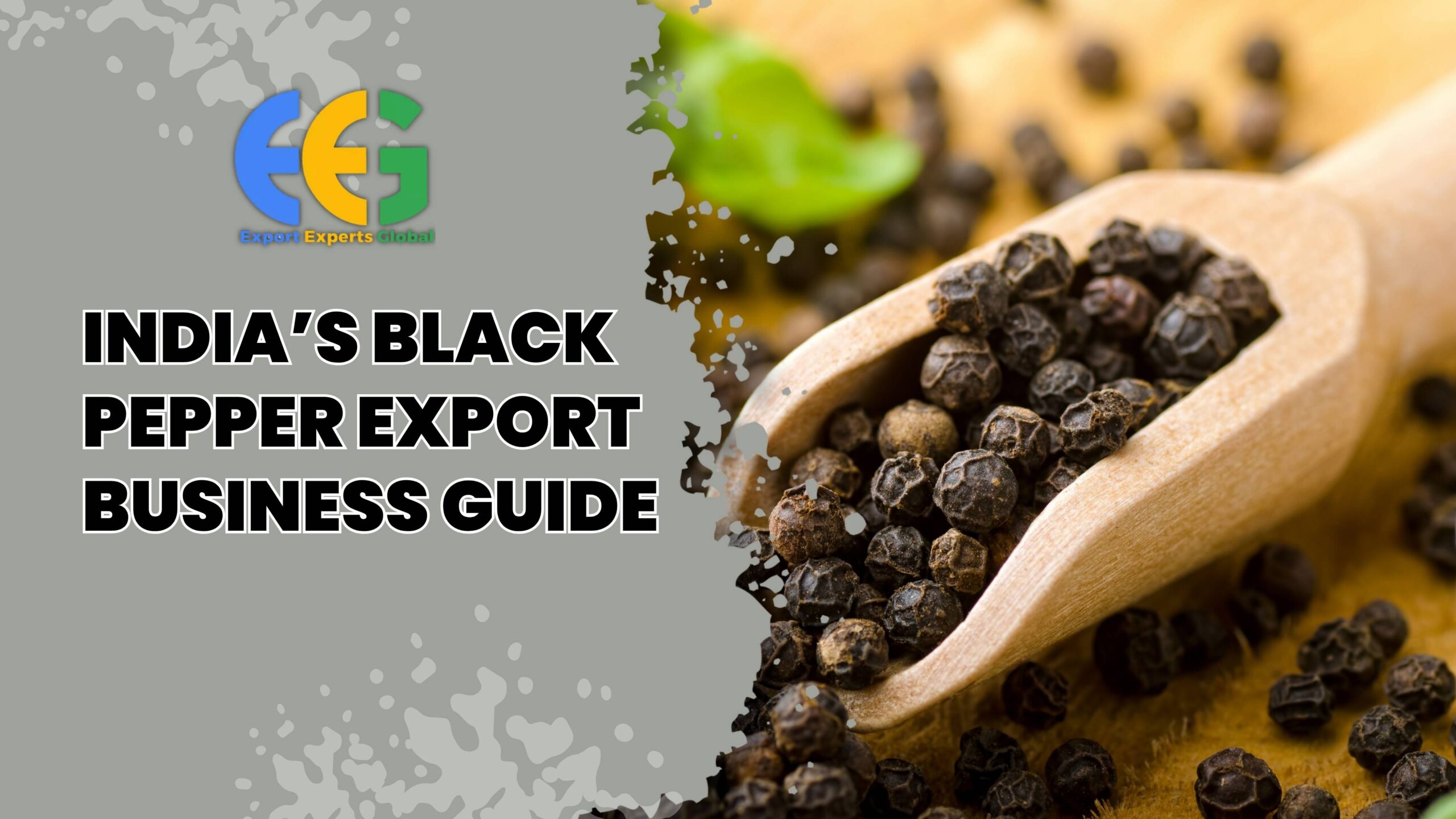
India has a long history of spice cultivation, and black pepper holds a premium position due to its superior quality. The unique tropical climate, rich soil conditions, and traditional farming practices in southern India contribute to its strong aroma and high oil content.
Countries like the USA, UAE, Germany, and the UK import large quantities of black pepper every year. The demand comes from multiple industries including food processing, pharmaceuticals, ayurvedic products, and packaged spices.
👉 Key Demand Drivers:
✔️ Strong aroma and pungency
✔️ High piperine content (quality marker)
✔️ Organic and chemical-free farming trend
✔️ Growing global spice consumption
🌱 Step 1 – Production & Sourcing Strategy
Black pepper is mainly cultivated in Kerala, Karnataka, and Tamil Nadu. If you want to enter this business, your first task is sourcing high-quality pepper.
You have two options:
- Direct sourcing from farmers (higher margins)
- Buying from mandis or traders (easier but lower margins)
👉 Pro Tip: Build relationships with farmers or cooperatives to ensure consistent supply and better pricing.
🌿 Step 2 – Processing & Drying
Fresh pepper berries are green in color. These are harvested and then dried under sunlight or using machines. During the drying process, the berries turn black and develop their characteristic flavor.
Proper drying is critical because moisture content directly affects quality and shelf life. Export-quality pepper usually contains around 10–12% moisture.
👉 Important Factors:
✔️ Uniform drying
✔️ Clean environment
✔️ No fungal contamination
🏭 Step 3 – Cleaning & Grading
After drying, black pepper undergoes cleaning to remove dust, stones, and impurities. It is then graded based on size, density, and appearance.
Popular export grades include:
✔️ Malabar Garbled (MG1) – Premium quality
✔️ Tellicherry Pepper – Extra bold and high value
✔️ FAQ (Fair Average Quality) – Budget segment
👉 Higher grade = Higher export price 💸
📦 Step 4 – Packaging Standards
Packaging plays a critical role in maintaining quality during international shipping. Exporters use jute bags, polypropylene bags, or vacuum-sealed food-grade packaging.
👉 Best Practices:
✔️ Use moisture-proof materials
✔️ Label clearly (origin, weight, grade)
✔️ Follow importing country regulations
Good packaging not only protects the product but also builds brand credibility.
📜 Step 5 – Export Documentation
To legally export black pepper from India, you must complete proper documentation. This ensures smooth customs clearance and avoids delays.
👉 Required Documents:
✔️ IEC (Import Export Code)
✔️ Commercial Invoice
✔️ Packing List
✔️ Phytosanitary Certificate
✔️ Certificate of Origin
✔️ Bill of Lading / Airway Bill
👉 Without proper documentation, your shipment can get stuck or rejected ❌
🚢 Step 6 – Export Process Explained
The export process involves multiple steps, starting from finding buyers to delivering the shipment.
👉 Step-by-step workflow:
- Identify target market
- Find buyers via B2B platforms (Alibaba, TradeIndia)
- Share samples and quotations
- Negotiate price and terms
- Finalize order and payment terms
- Ship goods via sea or air
👉 Sea freight is cheaper for bulk shipments, while air freight is faster for small orders.
💸 Profit Potential in Black Pepper Export
Black pepper export can generate significant profits if done strategically. Profit margins depend on sourcing cost, quality, and market demand.
👉 Example Breakdown:
• Buying price (India): ₹400–₹600 per kg
• Export price: ₹700–₹1200 per kg
• Profit margin: ₹200–₹500 per kg
If you export even 1 ton (1000 kg), your profit can range between ₹2 lakh to ₹5 lakh 💰
🌍 Top Export Markets to Target
Choosing the right market is critical for success. Some countries pay premium prices for high-quality Indian black pepper.
👉 High-demand countries:
✔️ USA 🇺🇸
✔️ UAE 🇦🇪
✔️ Germany 🇩🇪
✔️ UK 🇬🇧
✔️ Vietnam 🇻🇳
👉 Focus on markets with high consumption and stable demand.
📊 How to Find International Buyers
Finding genuine buyers is one of the biggest challenges for beginners. However, with the right approach, you can build a strong client base.
👉 Best Methods:
✔️ B2B platforms (Alibaba, IndiaMART)
✔️ Trade fairs and exhibitions
✔️ LinkedIn outreach
✔️ Export promotion councils
👉 Always verify buyers before dealing to avoid fraud ⚠️
⚠️ Common Mistakes to Avoid
Many beginners fail because they ignore basic export principles. Avoid these mistakes to succeed faster.
❌ Compromising on quality
❌ Ignoring documentation
❌ Poor packaging
❌ No market research
❌ Trusting unverified buyers
👉 Focus on long-term business, not quick profits.
🚀 Scaling Your Export Business
Once you gain experience, you can scale your business by expanding your product range and markets.
👉 Growth Strategies:
✔️ Add spices like turmeric, cardamom, cloves
✔️ Build your own export brand
✔️ Target premium organic markets
✔️ Increase shipment volume
Scaling smartly can turn your small export business into a multi-crore venture.
Overall Analysis
India’s black pepper has strong global demand, making it a profitable export opportunity for beginners and experienced entrepreneurs alike. With the right sourcing, quality control, and export strategy, you can build a sustainable and scalable business.
The world is already buying Indian spices—now it’s your turn to supply them 🌍💼