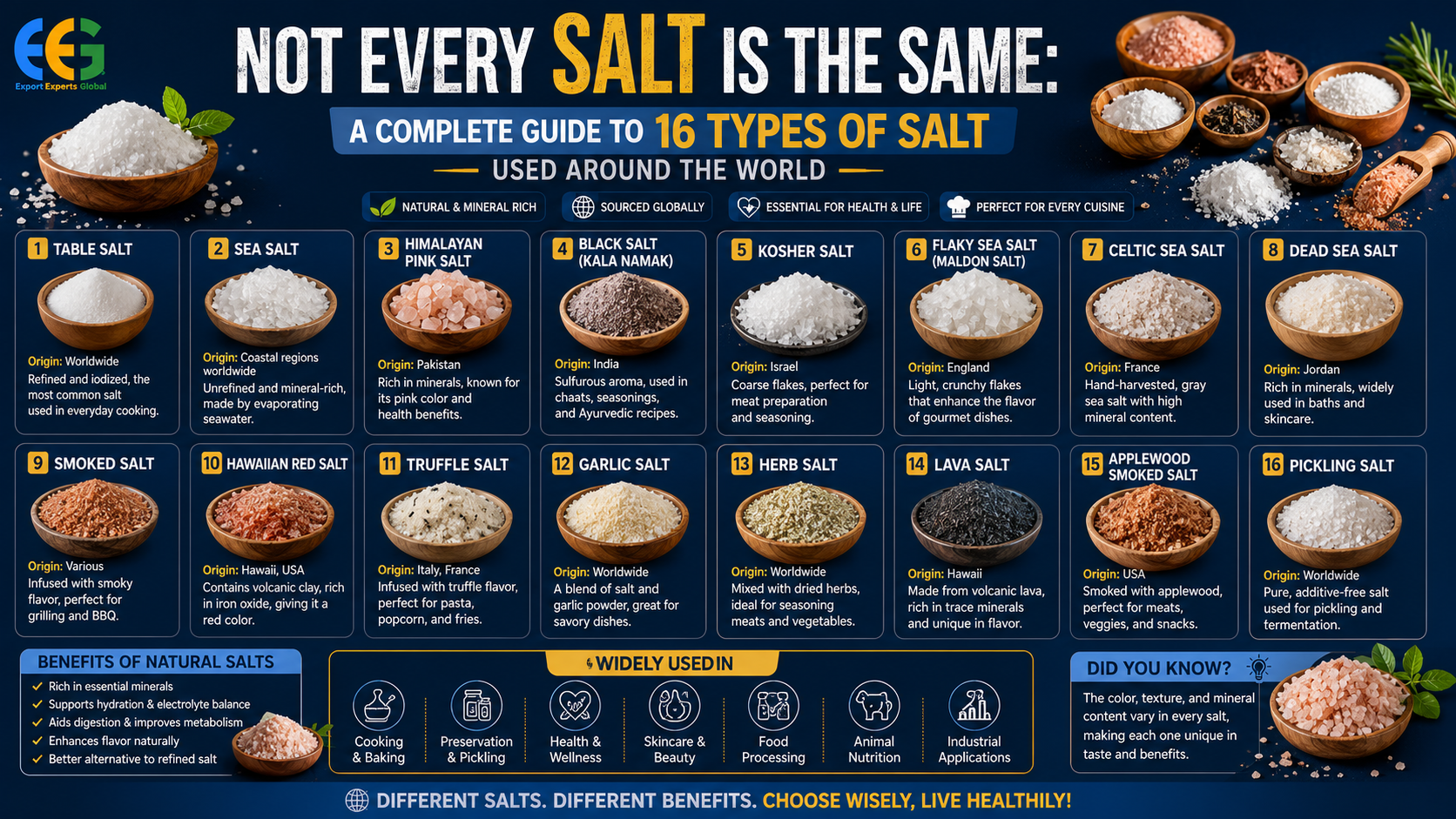
🌍 Why Salt Matters
Salt performs several important functions beyond adding flavor.
✅ Enhances Taste
Salt balances sweetness, reduces bitterness, and highlights natural flavors.
🥘 Improves Cooking
Different crystal sizes dissolve at different speeds, influencing seasoning and texture.
🥫 Preserves Food
Salt has long been used to preserve meat, fish, vegetables, and fermented foods.
🏭 Supports Food Manufacturing
Many processed foods rely on carefully selected salt grades for consistent production.
🧂 Why Not All Salt Is the Same
Although all edible salts primarily contain sodium chloride, they differ in several ways:
✔ Source
✔ Crystal shape
✔ Grain size
✔ Harvesting method
✔ Mineral composition
✔ Processing level
✔ Texture
✔ Culinary purpose
These differences influence how salt behaves during cooking and how it feels on the palate.
⚙️ Refined Table Salt
The most widely consumed salt worldwide is refined table salt.
Characteristics
🧂 Fine crystals
⚪ Uniform white appearance
🏭 Highly processed
🧪 Often contains anti-caking agents
Many regions also fortify table salt with iodine to help address iodine deficiency, depending on public health policies.
Best Uses
✔ Everyday cooking
✔ Baking
✔ Processed foods
✔ Household seasoning
🌊 Sea Salt
Sea salt is produced by evaporating seawater.
Traditional harvesting methods often involve shallow salt ponds where sunlight and wind naturally remove water.
Features
🌊 Larger crystals
🌿 Minimal processing (varies by producer)
✨ Distinct texture
Common Uses
🥗 Salads
🥩 Grilled foods
🍞 Bread
🥬 Vegetables
🩷 Himalayan Pink Salt
Himalayan Pink Salt is mined from ancient rock salt deposits and is known for its pink color, which comes from naturally occurring trace minerals.
Characteristics
🩷 Pink crystals
⛰ Rock salt
💎 Hard crystal structure
Best Uses
🍲 Soups
🥘 Curries
🔥 Cooking
🧂 Salt grinders
Because the crystals dissolve more slowly than very fine salts, they are often used during cooking or freshly ground at the table.
🌫 Fleur de Sel
Often called the “flower of salt,” Fleur de Sel forms as delicate crystals on the surface of salt ponds under specific weather conditions.
Features
✨ Thin crystals
🌊 Hand harvested
🍽 Premium culinary ingredient
Ideal For
🥩 Steak finishing
🥗 Salads
🍫 Chocolate desserts
🍪 Gourmet baking
🧂 Maldon Salt Flakes
Maldon salt is known for its pyramid-shaped flakes and crisp texture.
Why Chefs Love It
✨ Light flakes
🥄 Crunchy texture
⚡ Quick burst of flavor
Best Applications
🥩 Steak
🥬 Vegetables
🍳 Eggs
🍞 Fresh bread
Sprinkling these flakes just before serving creates a noticeable textural contrast.
🌑 Black Salt
Black salt varies by region and production method. One well-known variety used in South Asian cuisine has a distinctive sulfurous aroma.
Popular Uses
🥗 Fruit salads
🥤 Drinks
🥔 Chaat
🥙 Street food
Its flavor profile differs significantly from refined table salt.
🌋 Hawaiian Black Salt
This sea salt is traditionally blended with activated charcoal.
Features
⚫ Black appearance
🌊 Sea salt base
🍽 Decorative presentation
Commonly used as a finishing salt.
❤️ Hawaiian Red Salt
Its reddish color comes from volcanic clay rich in naturally occurring minerals.
Suitable For
🍖 Roasted meat
🐟 Seafood
🥗 Salads
🌊 Celtic Sea Salt
Traditionally harvested using methods that preserve moisture.
Characteristics
💧 Moist texture
🌊 Gray color
🌿 Mineral-rich appearance
Commonly used for cooking and seasoning.
❄ Kosher Salt
Kosher salt consists of coarse crystals and is valued for ease of handling.
Advantages
✔ Easy to pinch
✔ Dissolves predictably
✔ Popular in professional kitchens
Applications
🥩 Meat seasoning
🍗 Poultry
🥘 General cooking
🪨 Rock Salt
Rock salt is mined from underground deposits formed millions of years ago.
Applications include:
🧂 Food use (when food grade)
🧊 Ice cream making
🏭 Industrial applications (non-food grades)
Only food-grade rock salt should be used for culinary purposes.
🌱 Smoked Salt
Smoked salt is produced by exposing salt crystals to natural wood smoke.
Flavor
🔥 Smoky aroma
🌳 Wood-infused character
Best For
🥩 Barbecue
🍔 Burgers
🥬 Roasted vegetables
🍄 Truffle Salt
Premium salt blended with truffle or truffle flavoring.
Popular in:
🍟 French fries
🍝 Pasta
🍳 Eggs
🧀 Gourmet dishes
🧄 Garlic Salt
A blend of salt and garlic.
Used in:
🍕 Pizza
🍗 Chicken
🍔 Burgers
🥔 Potatoes
🌿 Herb Salt
A combination of salt and dried herbs.
Perfect for:
🥗 Salads
🥦 Vegetables
🍞 Bread
🍝 Italian cuisine
🌍 How Crystal Shape Affects Taste
Texture plays a major role in how salt is perceived.
🧂 Fine Crystals
✔ Dissolve quickly
✔ Even seasoning
✔ Baking
❄ Large Flakes
✔ Crunchy finish
✔ Visual appeal
✔ Burst of flavor
🪨 Large Rock Crystals
✔ Slow dissolution
✔ Ideal for long cooking
✔ Balanced seasoning
Choosing the right crystal size can significantly change the eating experience.
🍳 Choosing the Right Salt for Cooking
Different dishes benefit from different salts.
| Dish | Recommended Salt |
|---|
| Soups | Fine sea salt or Himalayan salt |
| Steak | Flake salt |
| Salads | Fleur de Sel |
| Baking | Refined table salt |
| Pasta water | Kosher salt |
| Finishing dishes | Maldon-style flakes |
🏭 Salt in Food Manufacturing
Industrial food manufacturers select salts based on:
✔ Particle size
✔ Purity
✔ Solubility
✔ Moisture
✔ Flow characteristics
✔ Packaging
Applications include:
🍞 Bakery
🥫 Canned foods
🥩 Meat processing
🧀 Dairy
🍟 Snack foods
🌍 Global Salt Trade
Salt is traded internationally for food and industrial applications.
Export markets include:
🌎 North America
🌍 Europe
🌏 Asia-Pacific
🌍 Middle East
🌍 Africa
Demand varies depending on food manufacturing, chemical industries, and consumer preferences.
📦 Packaging for Premium Salt
Packaging protects product quality and enhances shelf appeal.
Common options include:
🫙 Glass jars
📦 Stand-up pouches
🥫 Metal tins
🧂 Refill packs
High-quality packaging should provide moisture protection and clear labeling.
🌱 Sustainable Salt Harvesting
Many artisanal producers focus on:
♻ Responsible harvesting
🌊 Natural evaporation
💧 Efficient water use
📦 Recyclable packaging
These practices can support environmental stewardship while maintaining product quality.
🚀 Export Opportunities
Premium salts are increasingly popular among:
🏪 Gourmet retailers
🍽 Restaurants
🏨 Hotels
🛒 Supermarkets
🌐 Online marketplaces
🎁 Gift hamper businesses
Exporters who maintain consistent quality and attractive packaging can find opportunities in premium food markets.
📈 Future Trends
The specialty salt market continues to evolve with:
🌿 Gourmet cooking
🥗 Home chefs
🍽 Premium dining
🎁 Luxury food gifting
📱 E-commerce growth
🌍 International culinary exploration
Consumers are increasingly interested in ingredient origin, craftsmanship, and culinary experience.
Overall Analysis
Salt is much more than a simple seasoning. From finely milled table salt to delicate sea salt flakes and ancient rock salts, each variety offers unique characteristics that influence flavor, texture, and cooking performance.
Understanding the differences between salt types enables chefs, food manufacturers, retailers, and exporters to choose the right product for each application. While all edible salts share sodium chloride as their primary component, variations in crystal size, harvesting methods, and processing create distinct culinary experiences.
Selecting the appropriate salt can elevate both everyday cooking and premium food products, making it an important ingredient in kitchens and food industries around the world.