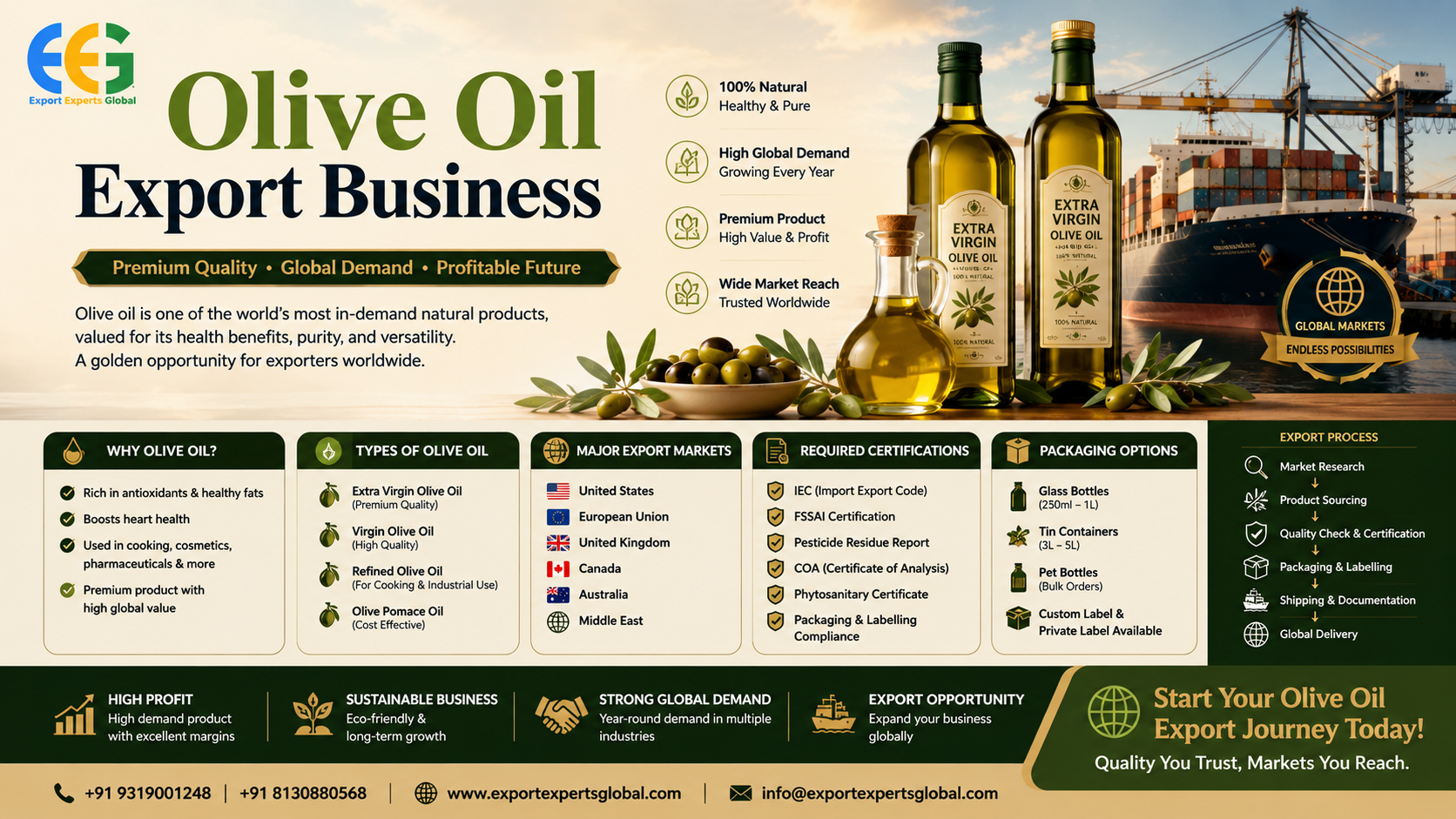
🫒 What Is Olive Oil?
Olive oil is a natural edible oil extracted from the fruit of the olive tree (Olea europaea). It is widely used in cooking, salad dressings, baking, cosmetics, pharmaceuticals, and wellness products due to its flavor profile and beneficial fatty acid composition.
Olive oil is particularly valued because it contains:
✅ Monounsaturated fats
✅ Natural antioxidants
✅ Vitamin E
✅ Polyphenols
✅ Healthy fatty acids
Its broad range of applications makes it a premium product in global trade.
🌍 Why Is Olive Oil Popular Worldwide?
Consumer awareness of balanced nutrition and premium culinary ingredients has increased the demand for olive oil across many regions.
Major reasons include:
🥗 Healthy cooking
🍝 Mediterranean cuisine
💚 Heart-friendly fat profile
🌿 Natural food ingredient
🍽 Premium restaurant use
💄 Cosmetic formulations
🧴 Personal care products
🏆 Types of Olive Oil
Understanding product categories is important before entering export markets.
🫒 Extra Virgin Olive Oil (EVOO)
This is considered the highest-quality category, obtained through mechanical extraction without excessive heat or chemical treatment.
Common uses:
🥗 Salad dressings
🍞 Bread dipping
🍝 Premium cooking
🍽 Gourmet foods
Advantages
✔ Rich flavor
✔ Premium positioning
✔ Widely preferred by health-conscious consumers
🌿 Virgin Olive Oil
Virgin olive oil is also mechanically extracted but generally has a slightly higher acidity than extra virgin olive oil while remaining suitable for culinary use.
🍳 Refined Olive Oil
Refined olive oil is processed to improve stability and neutralize strong flavors.
It is commonly used for:
🍳 Frying
🍽 Commercial kitchens
🏨 Hotels
🍴 Food manufacturing
🏭 Olive Pomace Oil
Pomace oil is produced from the remaining olive paste after the initial extraction, followed by refining and blending according to applicable standards.
It is widely used in:
🍟 Restaurants
🏭 Food processing
🍳 Bulk cooking
🌎 Global Demand for Olive Oil
The global olive oil market continues to expand as more consumers seek premium edible oils.
Major demand drivers include:
🌱 Health-conscious lifestyles
🥗 Functional foods
🍽 Fine dining
🏨 Hospitality industry
🛒 Retail supermarkets
🌍 Rising disposable incomes
📦 Olive Oil Packaging Options
Packaging influences both product protection and brand perception.
Popular options include:
🫙 Glass bottles
🥫 Metal tins
🧴 PET bottles
🛢 Bulk drums
📦 Bag-in-box systems
Premium products are often packed in dark-colored bottles to help reduce light exposure during storage.
🏷 Importance of Attractive Packaging
Quality packaging helps exporters:
✅ Build brand identity
✅ Improve shelf appeal
✅ Protect product quality
✅ Increase customer confidence
✅ Support international retail sales
Packaging should include clear labeling, batch identification, nutritional information, and country-of-origin details in accordance with the importing country’s regulations.
📋 Documents Required for Olive Oil Export
Export documentation requirements vary by destination country, but commonly include:
📄 Commercial Invoice
📦 Packing List
🚢 Bill of Lading or Air Waybill
🌍 Certificate of Origin (when required)
🏛 Importer-specific documentation
🧾 Insurance documents (where applicable)
Exporters should also ensure compliance with destination-country food regulations and labeling requirements.
🧪 Quality Parameters Buyers Check
International buyers typically evaluate:
✔ Acidity
✔ Moisture and impurities
✔ Sensory characteristics
✔ Packaging quality
✔ Shelf life
✔ Traceability
✔ Batch consistency
✔ Label compliance
Maintaining consistent quality helps build long-term buyer relationships.
🌍 Major Olive Oil Importing Regions
Olive oil is imported by countries across:
🇺🇸 North America
🇪🇺 Europe
🌏 Asia
🌍 Middle East
🌎 Latin America
🌍 Africa
Demand varies by consumer preferences, culinary traditions, and retail market growth.
🚢 Export Opportunities
Olive oil serves multiple customer segments.
Potential buyers include:
🏪 Supermarkets
🛒 Retail chains
🍴 Restaurants
🏨 Hotels
🏭 Food manufacturers
💄 Cosmetic companies
🧴 Personal care brands
🌐 E-commerce businesses
🍽 Food Industry Applications
Olive oil is widely used in:
🥗 Salad dressings
🍝 Pasta
🍕 Pizza
🥘 Sauces
🍞 Bakery products
🥙 Mediterranean cuisine
🥬 Vegetable dishes
💄 Cosmetic Industry Applications
Olive oil is also used in:
🧼 Soap manufacturing
🧴 Skin creams
💆 Massage oils
🧴 Hair care products
💄 Beauty formulations
Its emollient properties make it a valued ingredient in many personal care products.
🏭 Value-Added Olive Oil Products
Exporters can diversify their offerings with products such as:
🌿 Herb-infused olive oil
🌶 Chili-infused olive oil
🧄 Garlic-flavored olive oil
🍋 Lemon-infused olive oil
🎁 Gift packs
🧴 Premium gourmet collections
Value-added products can help brands differentiate themselves in competitive markets.
📈 Factors Influencing Export Success
Successful exporters focus on:
✔ Product quality
✔ Competitive pricing
✔ Consistent supply
✔ Reliable logistics
✔ Professional packaging
✔ Regulatory compliance
✔ Responsive customer service
🌱 Sustainability in Olive Oil Production
Sustainability is becoming increasingly important to international buyers.
Key initiatives include:
♻ Eco-friendly packaging
💧 Efficient water management
🌱 Sustainable farming practices
⚡ Energy-efficient processing
📦 Recyclable packaging materials
Environmentally responsible practices can enhance brand reputation and support long-term market access.
📊 Marketing Strategies
Promoting olive oil effectively requires a combination of digital and traditional marketing.
Useful approaches include:
🌐 Professional website
📱 Social media marketing
📧 Email campaigns
🛍 Participation in trade exhibitions
🤝 Distributor partnerships
📦 Retail collaborations
📸 High-quality product photography
🚚 Logistics and Transportation
Olive oil should be transported under conditions that preserve quality.
Important considerations include:
📦 Secure packaging
🌡 Appropriate temperature management
🚢 Reliable freight services
📄 Accurate documentation
📍 Shipment tracking
Protecting the product from excessive heat, direct sunlight, and physical damage helps maintain quality during transit.
💼 Building Long-Term Buyer Relationships
Successful export businesses prioritize:
🤝 Transparent communication
📦 On-time deliveries
📋 Consistent specifications
💬 Prompt customer support
⭐ Reliable product quality
Long-term relationships often lead to repeat orders and stronger market presence.
🌍 Future of the Olive Oil Export Business
Global demand for premium edible oils is expected to remain strong, driven by:
🌱 Health-conscious consumers
🥗 Interest in Mediterranean-style diets
🌍 Growth of international food retail
🛒 Expansion of online grocery platforms
💄 Increasing use in cosmetics
🏨 Rising hospitality demand
Brands that invest in quality, innovation, and sustainability are well positioned for future growth.
Overall Analysis
The olive oil export business presents attractive opportunities for exporters serving the global food, hospitality, and personal care industries. By offering high-quality products, attractive packaging, and dependable service, businesses can establish lasting relationships with international buyers.
Success in this sector depends on understanding product categories, meeting destination-country requirements, maintaining quality standards, and building a trusted brand. Exporters who combine these elements with effective marketing and efficient logistics can compete successfully in the growing global olive oil market.