🏫 Understanding the Concept – Waste is No Longer Waste
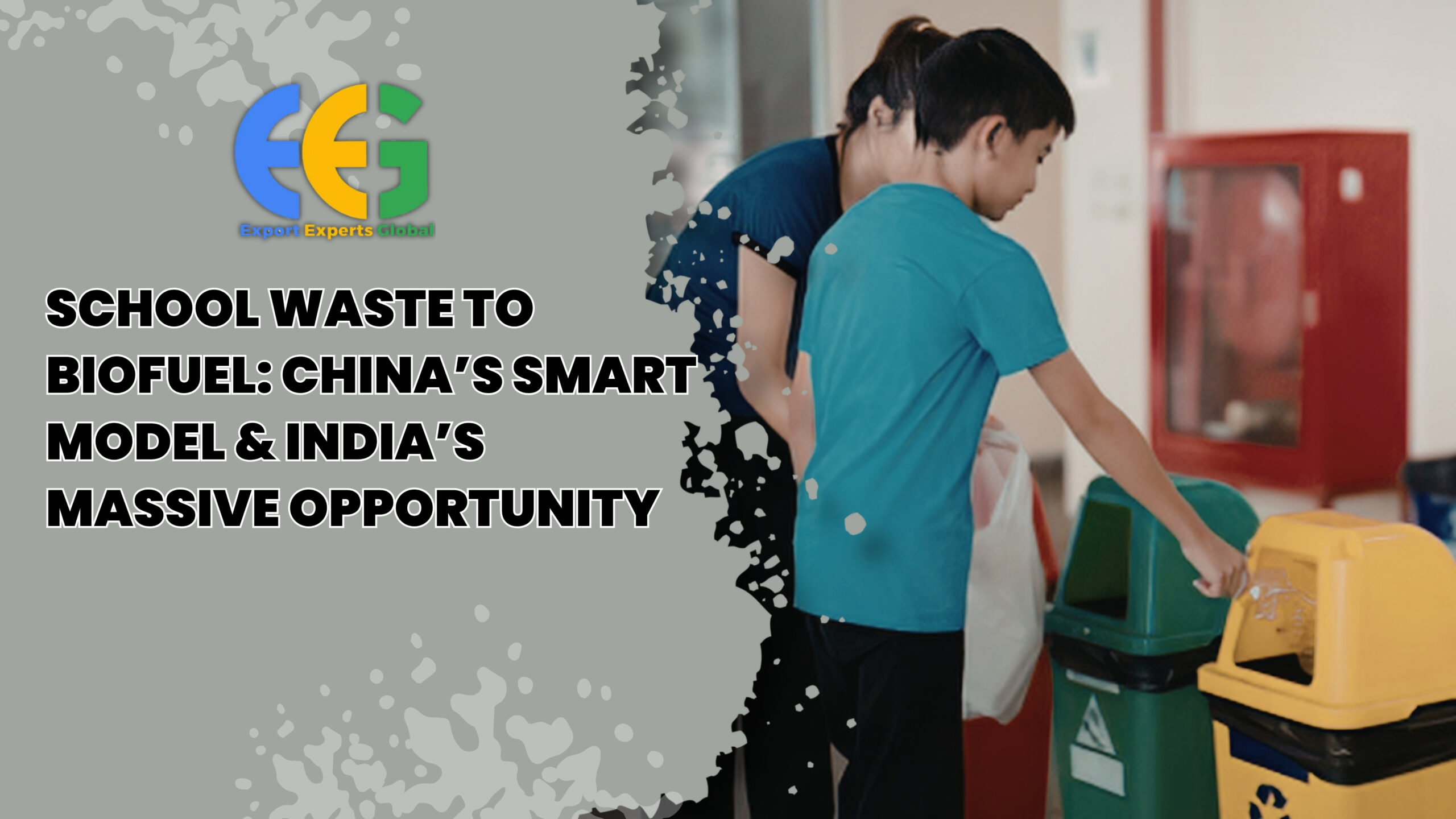
Every day, schools, colleges, restaurants, and canteens generate large amounts of food waste. Traditionally, this waste:
❌ Goes to landfills
❌ Produces methane gas (harmful greenhouse gas)
❌ Increases pollution and disposal costs
But in China, this same waste is now being treated as a resource, not a problem.
👉 The mindset shift is simple:
Waste = Raw Material for New Products
📦 Step 1 – Food Waste Collection
The process begins with proper segregation:
✔ Leftover food is collected separately
✔ Plastic, packaging, and non-organic waste are removed
✔ Only biodegradable food waste is processed
This step is critical because clean input = high-quality output.
In schools, students and staff are educated to separate waste properly, making the system efficient and scalable.
⚙️ Step 2 – Smart Machine Installation
The real innovation lies in the technology.
Special machines are installed directly inside canteens or nearby facilities. These machines:
✔ Process food waste on-site
✔ Reduce transportation costs
✔ Work automatically with minimal human intervention
👉 This decentralized system ensures fast processing and zero accumulation of waste.
♻️ Step 3 – Waste to Resource Conversion
Once the waste enters the machine, it undergoes biological and mechanical processing.
🔥 Output 1 – Biofuel
Food waste is converted into:
✔ Biogas
✔ Energy fuel
👉 This fuel can be used for cooking, heating, or even electricity generation.
🌱 Output 2 – Organic Fertilizer
The remaining material is processed into:
✔ Nutrient-rich compost
✔ Soil-friendly organic fertilizer
👉 This is highly valuable for agriculture and gardening industries.
🌍 Step 4 – Environmental Impact
This model creates a strong positive impact:
✔ Reduces landfill waste
✔ Cuts methane emissions
✔ Lowers pollution levels
✔ Promotes sustainable living
👉 It supports global environmental goals like carbon reduction and waste management efficiency.
💡 The Circular Economy Model
This system is a perfect example of the circular economy, where:
Food Waste → Processing → Fuel + Fertilizer → Reuse
Nothing is wasted. Everything is reused.
👉 This is the future of sustainable business models.
🇮🇳 India’s Opportunity – A Billion-Dollar Idea
India generates millions of tons of food waste every year from:
✔ Schools & colleges
✔ Restaurants & hotels
✔ Wedding functions
✔ Household kitchens
Most of this waste is underutilized or dumped.
👉 If converted properly, it can become a multi-crore industry.
📊 Market Potential in India
Key Factors Driving Opportunity:
✔ Large population = high waste generation
✔ Growing awareness of sustainability
✔ Government focus on clean energy
✔ Rising demand for organic fertilizers
👉 This creates a perfect ecosystem for waste-to-energy startups.
🚀 Business Models You Can Start
1️⃣ On-Site Waste Processing Units
Install machines in:
✔ Schools
✔ Colleges
✔ Corporate offices
👉 Earn through service fees or partnerships
2️⃣ Biofuel Production Business
Collect food waste and convert it into:
✔ Biogas
✔ Commercial fuel
👉 Sell to industries or local markets
3️⃣ Organic Fertilizer Brand
Convert waste into compost and sell as:
✔ Organic fertilizer
✔ Gardening products
👉 High demand in agriculture and urban gardening
4️⃣ Waste Collection & Logistics
Build a network to:
✔ Collect food waste from multiple locations
✔ Supply it to processing units
👉 Low investment, scalable model
💰 Profit Potential
This business is attractive because:
✔ Raw material cost = almost zero
✔ Continuous supply of waste
✔ Multiple revenue streams
Example Revenue Sources:
✔ Waste collection fees
✔ Sale of biofuel
✔ Sale of fertilizer
✔ Government subsidies
👉 High margins with proper scaling
🏭 Technology & Setup
To start, you need:
✔ Food waste processing machine
✔ Collection system
✔ Storage facility
✔ Distribution network
Small machines can cost ₹2–10 lakh, while larger industrial setups may require higher investment.
📦 Government Support & Policies
In India, initiatives like:
✔ Swachh Bharat Mission
✔ Waste-to-Energy programs
✔ Renewable energy subsidies
👉 Provide support for such businesses
This reduces risk and increases profitability.
⚠️ Challenges to Consider
Like any business, there are challenges:
❗ Lack of awareness
❗ Improper waste segregation
❗ Initial investment cost
❗ Technology maintenance
👉 Solutions:
✔ Awareness campaigns
✔ Partnerships with institutions
✔ Training and automation
🌱 Sustainability Advantage
This model is not just profitable—it is future-proof.
With global focus on:
🌍 Climate change
♻️ Recycling
🌱 Sustainable living
Businesses in this space will continue to grow rapidly.
🔑 Key Business Lessons
This concept teaches powerful lessons:
✔ Problems can become opportunities
✔ Waste can be monetized
✔ Sustainability = profitability
✔ Innovation creates new industries
👉 Biggest takeaway:
What looks like garbage can become a goldmine. 💰
🌍 Future Scope
The future of waste management lies in:
✔ Smart machines
✔ Decentralized processing
✔ Circular economy systems
Countries adopting these models early will:
✔ Reduce environmental damage
✔ Create new industries
✔ Generate employment
🚀 How to Start in India
Step-by-Step Plan:
1️⃣ Identify waste sources (schools, hotels)
2️⃣ Partner with institutions
3️⃣ Install small processing units
4️⃣ Convert waste into fuel/fertilizer
5️⃣ Sell output products
6️⃣ Scale operations
👉 Start small → Expand city-wide → Build a network
Overall Analysis
China’s school canteen model proves one thing clearly:
👉 Waste is not the problem—lack of innovation is.
For entrepreneurs in India, this is a massive opportunity to:
✔ Build a sustainable business
✔ Solve a real-world problem
✔ Earn high profits
🔥 Final Thought:
Kal ka kachra… aaj ka business opportunity hai.
The future belongs to those who can turn waste into wealth. ♻️💰