Export Experts Global

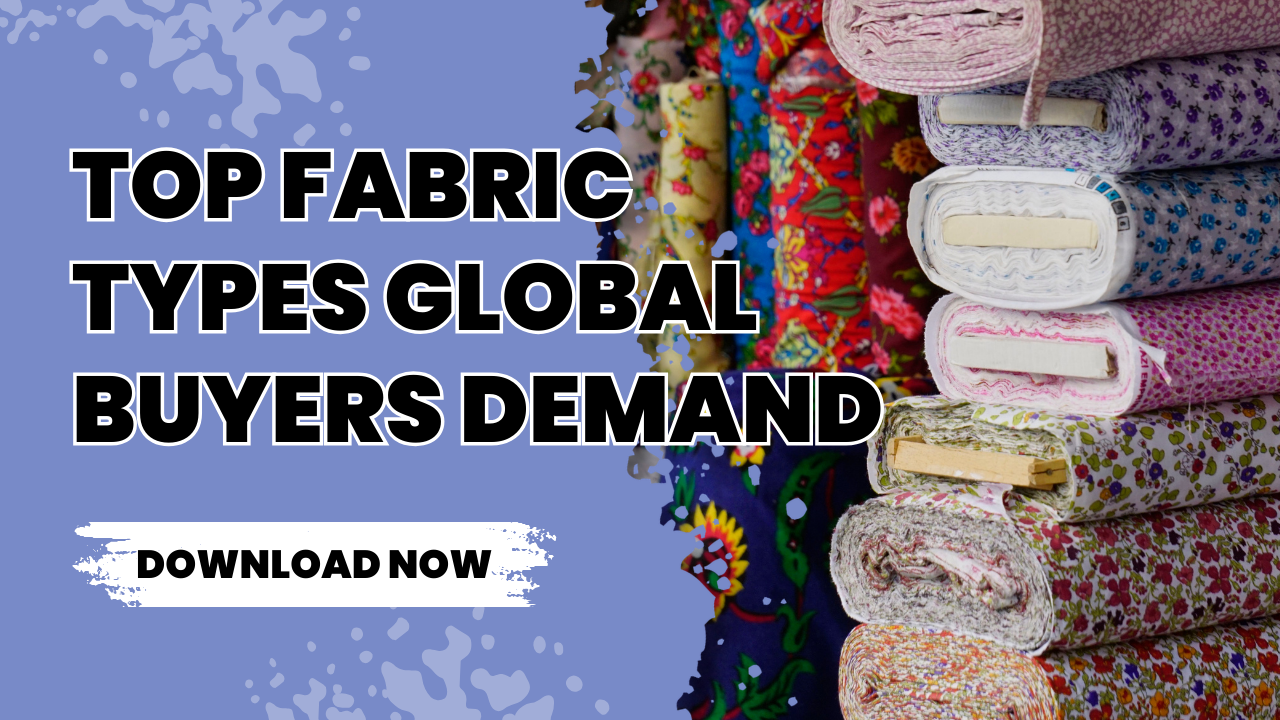
India’s textile industry is booming, with global buyers clamoring for premium, performance, and sustainable fabrics. From mass-market cotton to luxury cashmere, these top fabric types offer consistent year-round demand across apparel, home textiles, and industrial sectors. This guide reveals the 17 most sought-after fabrics, why buyers love them, and how to capitalize on export opportunities in fashion, activewear, and luxury markets.

Why These Fabrics Dominate Global Demand

Global buyers prioritize fabrics with proven reliability, versatility, and applications in diverse markets. Key reasons include:

  • Consistent Year-Round Consumption: Stable demand unaffected by fashion cycles.

  • Multi-Market Reach: Exported to Europe, North America, Asia, and beyond.

  • Diverse Applications: Spanning fashion, sportswear, home textiles, automotive, and accessories.

  • Emerging Trends: Recycled blends and technical finishes boost sustainable exports.

Position these 17 fabric categories right for stable margins—naturals for premium pricing, synthetics for high-volume fast fashion.

Natural Premium Fabrics: Breathable and Timeless Exports

These fibers lead mass-market and luxury exports with high volumes and premium pricing.

FabricKey Features & Demand DriversTop Export Markets
CottonBreathable, versatile for everyday apparelFast fashion retailers worldwide
LinenNatural flax for summer casuals & sustainable wearEco-conscious brands in Europe
CashmereLuxury goat hair for winter collectionsPremium EU/NA luxury markets
SilkProtein fiber for bridal & coutureHigh-end fashion houses


India’s cotton and silk prowess makes these top picks for exporters.

Fashion & Luxury Fabrics: Elevate Your Exports

Command high prices in bridal, eveningwear, and designer segments with these textured staples.

  • Velvet: Royal texture for party wear and occasion garments—huge in festive exports.

  • Satin: Smooth sheen for gowns and bridal—steady demand from couture buyers.

  • Chiffon: Lightweight flow for women’s dresses—ideal for evening fashion.

  • Organza: Crisp structure for designer collections—luxury bridal favorite.

Target European and North American buyers for year-round orders.

Casual & Durable Fabrics: Repeat Orders from Retailers

These workhorse materials withstand daily wear, driving bulk exports for wardrobes and outerwear.

  • Denim: Evergreen for jeans, jackets—demanded by all demographics globally.

  • Corduroy: Textured ribs for winter fashion—seasonal hits with retailers.

  • Fleece: Warm insulation for hoodies, sweatshirts—winterwear export star.

  • Tweed: Heritage wool for blazers, suits—premium outerwear segments.

Perfect for building long-term retailer relationships.

Synthetic & Performance Fabrics: High-Volume Growth Segments

Affordable and functional, these dominate sportswear, uniforms, and technical uses.

FabricKey Features & Demand DriversGrowth Sectors
PolyesterDurable, affordable for sportswear/uniformsFast-fashion & industrial
SpandexElastic for activewear/stretch garmentsFitness & athleisure boom
NylonStrong for sports, military/outdoorTechnical & performance apparel


Fitness trends and e-commerce fuel explosive export potential.

Specialty Fabrics: Leather and Vegan Alternatives

High-value niches in accessories and upholstery.

  • Leather (Natural & Synthetic): Jackets, footwear, bags, wallets, belts—strong in EU/NA.

  • Sustainable Vegan Leather: Rapidly expanding for eco-fashion, automotive interiors.

Accessories and outerwear buyers seek these for premium margins.

Market Opportunity: 17 Fabrics for Stable Textile Exports

These categories deliver reliable returns:

  • Mass Market: Cotton, denim, polyester for volume.

  • Premium Tier: Silk, cashmere, organza for luxury pricing.

  • Performance: Spandex, nylon for activewear surge.

Leverage India’s manufacturing edge for recycled blends and technical finishes to meet buyer specs.

How to Start Exporting These Top Fabrics from India

  1. Research Buyers: Target fast-fashion (cotton/denim), luxury (cashmere/silk), and performance (spandex) segments.

  2. Certify Sustainability: Add recycled content for premium pricing.

  3. Build Networks: Connect via trade shows like Texworld or India International Garment Fair.

  4. Optimize Logistics: Use IEC and HS codes for smooth exports.

With global demand steady, Indian exporters can thrive in this $1 trillion+ textile market.

Ready to export? Which fabric type aligns with your supply chain—cotton for volume or cashmere for margins?

Leave a Reply

Your email address will not be published. Required fields are marked *

Related Blog & Article

Best Import Export Course In Delhi

Best Import Export Course In Delhi

Contact Us