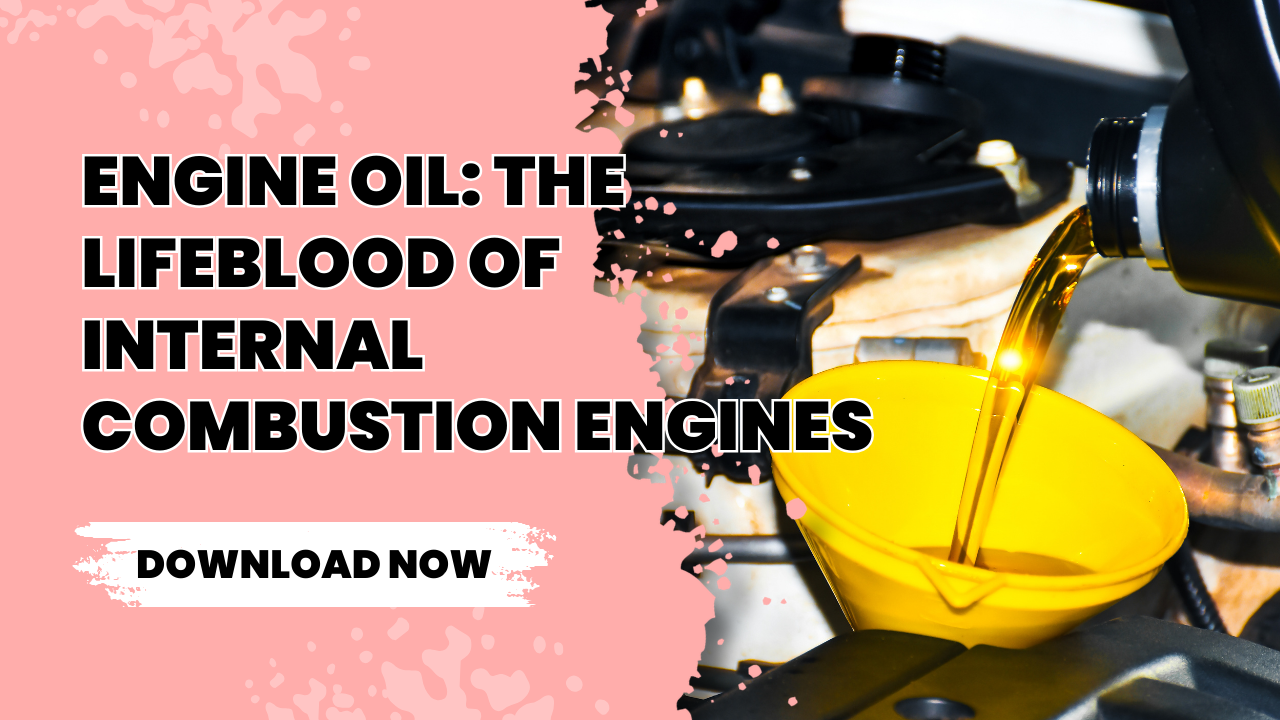
Why Engine Oil Is Critical for Engine Performance
An internal combustion engine operates under extreme heat, pressure, and friction. Without proper lubrication, metal components would grind against each other, causing rapid wear and failure.
Modern engine oils are advanced formulations made from high-quality base oils combined with carefully engineered additive packages. These components work together to deliver multiple critical functions:
1. Friction Reduction
Engine oil forms a protective film between moving parts such as pistons, crankshafts, and camshafts, minimizing metal-to-metal contact.
2. Heat Dissipation
It carries heat away from combustion zones and critical components, helping regulate engine temperature.
3. Contaminant Control
Oil suspends soot, debris, and sludge particles, preventing deposit buildup inside the engine.
4. Corrosion Prevention
Additives neutralize acids formed during combustion and protect metal surfaces from rust.
Without high-quality oil, even the most advanced engine design cannot perform reliably.
The Three Main Types of Engine Oil
Mineral Engine Oil
Mineral oil is refined directly from crude oil. It is the most economical option and provides adequate protection for standard engines under normal driving conditions.
Semi-Synthetic Engine Oil
Semi-synthetic oil is a blend of mineral and synthetic base stocks. It offers better protection and temperature stability compared to mineral oil.
It is commonly used in modern passenger vehicles.
Fully Synthetic Engine Oil
Fully synthetic oil is chemically engineered for superior performance. It offers excellent protection under extreme temperatures and heavy load conditions.
Ideal for high-performance cars, turbocharged engines, and demanding climates.
Understanding Viscosity Grades and SAE Classification
Engine oil viscosity is classified by the Society of Automotive Engineers (SAE). The grading system defines how oil flows at cold start and at operating temperature.
Multi-grade oils are represented with two numbers separated by “W” (Winter).
Cold Temperature Rating
The number before “W” indicates performance in cold conditions:
Lower numbers mean better flow during cold starts.
Hot Temperature Rating
The number after “W” indicates oil thickness at operating temperature:
Higher numbers provide stronger protection under heat and load.
Common Viscosity Grades for Passenger Cars
0W-20 – Fuel-efficient modern engines
5W-30 – Most widely used
5W-40 – Higher performance engines
10W-30 – Moderate climates
Heavy-Duty and Commercial Applications
Choosing the correct viscosity is crucial for engine longevity and warranty compliance.
API and ACEA Performance Standards
Beyond viscosity, engine oils must meet performance standards.
API Standards
The American Petroleum Institute (API) sets specifications primarily for North American markets.
API codes use two letters:
“S” category – Petrol engines (e.g., SN, SP)
“C” category – Diesel engines (e.g., CK-4, FA-4)
Each new category improves protection, cleanliness, and emission system compatibility.
ACEA Standards
The European Automobile Manufacturers Association (ACEA) defines performance categories for European vehicles.
Common ACEA classifications include:
A3/B4 – High-performance petrol and diesel engines
C2/C3 – Low SAPS oils for emission systems
E7/E9 – Heavy-duty diesel engines
Always verify that the oil meets the manufacturer’s recommended specification.
2-Wheeler vs 4-Wheeler Engine Oil
Engine oil requirements differ significantly between motorcycles and cars.
Motorcycle Engine Oil
Motorcycles often use a shared lubrication system for engine, gearbox, and clutch.
Key characteristics:
Motorcycle oils must prevent clutch slippage while protecting gears.
Automotive Engine Oil
Car engines have separate lubrication systems.
Key characteristics:
Optimized for fuel efficiency
Lower viscosity options available
Strong detergent packages
Automotive oil focuses primarily on engine protection.
2T vs 4T Engine Oils for Two-Wheelers
2-Stroke (2T) Engine Oil
Used in two-stroke engines where oil mixes directly with fuel.
Key features:
Commonly meets TC-W3 standards for water-cooled engines.
4-Stroke (4T) Engine Oil
Used in four-stroke engines with a separate oil sump.
Key features:
Multi-grade options (10W-40, 20W-50)
Wet clutch compatibility
High-temperature stability
API SG or higher specification
4T oils allow longer service intervals compared to 2T oils.
Petrol vs Diesel Engine Oils
Petrol Engine Oils
Designed for engines operating at higher RPM with lower compression ratios.
Common specifications:
Focus areas include oxidation stability and fuel efficiency.
Diesel Engine Oils
Designed for high compression and soot control.
Common specifications:
Diesel oils contain stronger detergent and dispersant packages to manage soot and acids.
⚠ Never interchange petrol and diesel oils without manufacturer approval.
Essential Additive Packages in Modern Engine Oils
Base oils provide lubrication, but additives enhance protection. Additives typically make up 15–25% of the formulation.
Detergents
Neutralize acids and prevent deposits.
Dispersants
Keep contaminants suspended and prevent sludge formation.
Anti-Wear Agents
ZDDP forms protective films under high pressure.
Corrosion Inhibitors
Protect engine components from rust.
Viscosity Modifiers
Maintain consistent thickness across temperatures.
Anti-Foaming Agents
Prevent air entrapment and ensure stable lubrication.
The right additive balance determines oil performance and longevity.
Packaging and Export Compliance Requirements
Engine oil packaging varies based on market demand.
Retail Packaging
1L bottles
3L containers
5L jugs
Industrial Packaging
20L pails
208L drums
IBC tanks (200–1000L)
Required Export Documentation
International trade requires proper certification and compliance.
Essential documents include:
Material Safety Data Sheet (MSDS)
Certificate of Analysis (COA)
ISO 9001 certification
API licensing verification
Independent laboratory testing reports
Viscosity, flash point, TBN, and elemental analysis results
Documentation must comply with destination country regulations before shipment.
Final Thoughts
Engine oil is the foundation of engine reliability. Choosing the correct viscosity grade, performance specification, and oil type ensures optimal protection, fuel efficiency, and long service life.
For automotive professionals and lubricant exporters, technical knowledge builds customer trust and opens strong business opportunities in domestic and international markets.
Understanding engine oil at a technical level gives you a clear competitive advantage in the lubrication industry.